
The CFO’s Guide to Optimizing Supply Chain & Inventory Management
Supply chain and inventory management are critical components of a CFO's strategic toolkit. It’s not solely about ensuring shelves are stocked or that materials arrive on time; it is intrinsically linked to financial health, cash flow, and sustainable growth. Implementing the right software solutions can lead to streamlined operations, reduced waste, and increased profitability.
Choosing the Right Software: Inventory Management vs. Supply Chain Management
The choice between inventory management and supply chain management software hinges on your specific operational requirements.
-
Inventory Management Software focuses on stock tracking, order fulfillment, and warehouse optimization. It provides businesses with accurate stock levels, reduces instances of overstocking or stockouts, and streamlines warehouse operations through automation. These systems integrate with accounting platforms, making them essential for financial oversight and operational efficiency. They are particularly valuable for businesses that need to maintain accurate stock records, manage order processing, and optimize storage capacity.
-
Supply Chain Management Software provides a broader perspective by integrating logistics, procurement, supplier networks, and demand forecasting. It enables businesses to manage their entire supply chain—from sourcing raw materials to delivering finished products. These systems help your company optimize supplier relationships, improve demand forecasting, and enhance logistical coordination. They are crucial for companies that operate across multiple locations, rely on international suppliers, or need to synchronize production with fluctuating demand.
Inventory Management Software Recommendations
The right inventory management software can provide real-time visibility into product availability, demand forecasting, and automated reordering—leading to optimized stock levels and streamlined fulfillment.
Small Businesses & Startups:
-
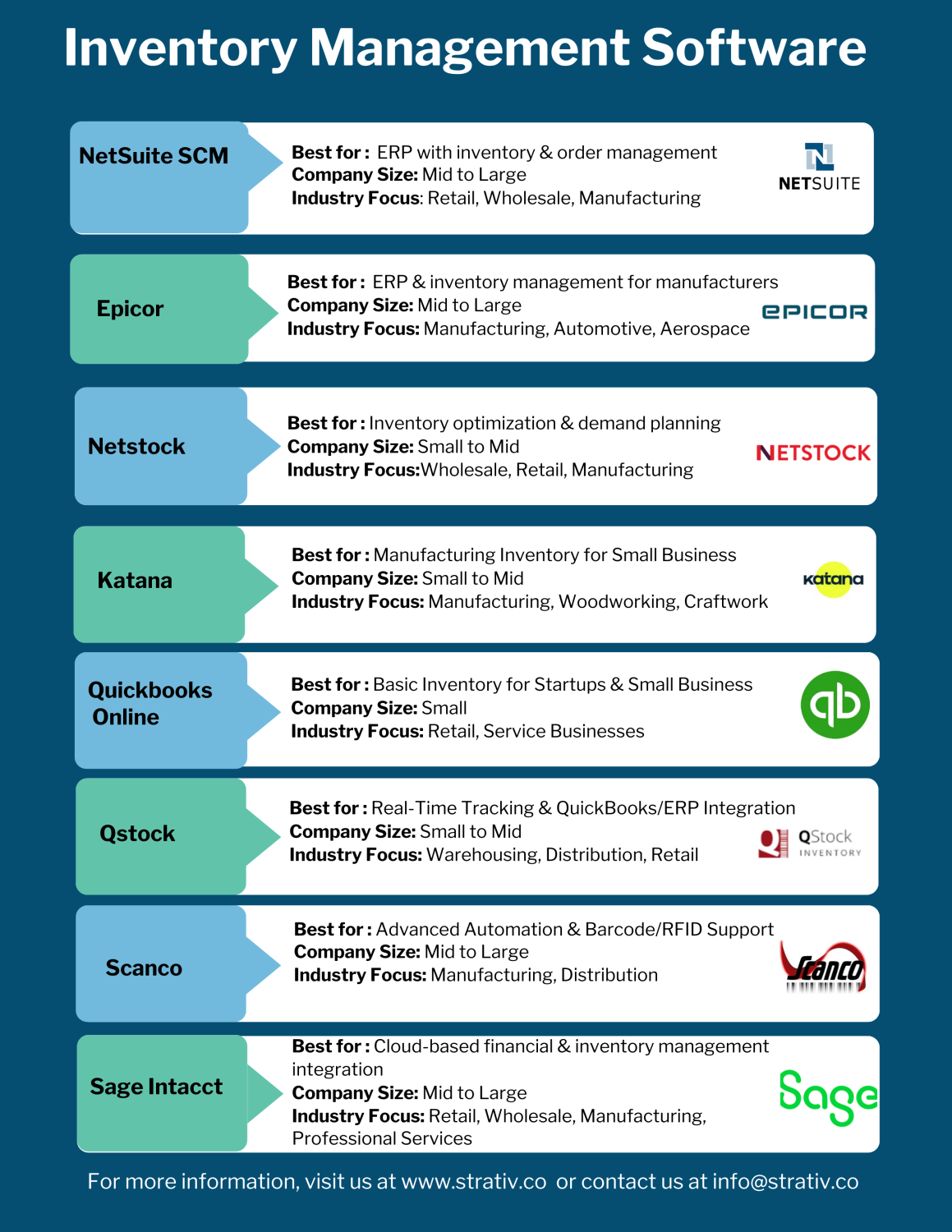
QuickBooks Online: Offers basic inventory tracking integrated with accounting features.
-
Katana: Provides simple inventory and production management for small manufacturers.
Mid-Sized Businesses:
-
NetSuite SCM: An ERP-integrated solution offering inventory management, order management, and warehouse management capabilities.
Large Enterprises:
-
NetSuite SCM (with advanced modules): Provides advanced features like demand planning, supply planning, and global inventory management.
-
Epicor: Offers a comprehensive suite of inventory management, manufacturing, and distribution solutions.
Manufacturers:
-
Epicor: Caters specifically to manufacturers with features such as bill of materials (BOM) management, production scheduling, and quality control.
-
Katana: Provides integrated inventory and production management for small to medium-sized manufacturers.
Supply Chain Management Software Recommendations
As your business grows, supply chain complexities increase—necessitating software that can manage multi-tier supplier networks, predictive analytics, and global logistics.
Small Businesses & Startups:
-
Precoro: Offers cloud-based procurement software with features like purchase order management, supplier management, and spend analytics.
-
FreightPOP: Provides transportation management solutions for small to medium-sized businesses.
-
ShipBob: Offers e-commerce fulfillment solutions, including order management, inventory management, and shipping.
Mid-Sized Businesses:
-
Microsoft Dynamics 365: Provides a suite of supply chain management solutions, including procurement, inventory management, and transportation management.
-
Logility: Offers supply chain planning and optimization solutions, including demand planning, inventory optimization, and supply planning.
-
E2open: Provides a cloud-based platform for supply chain collaboration and visibility.
Large Enterprises:
-
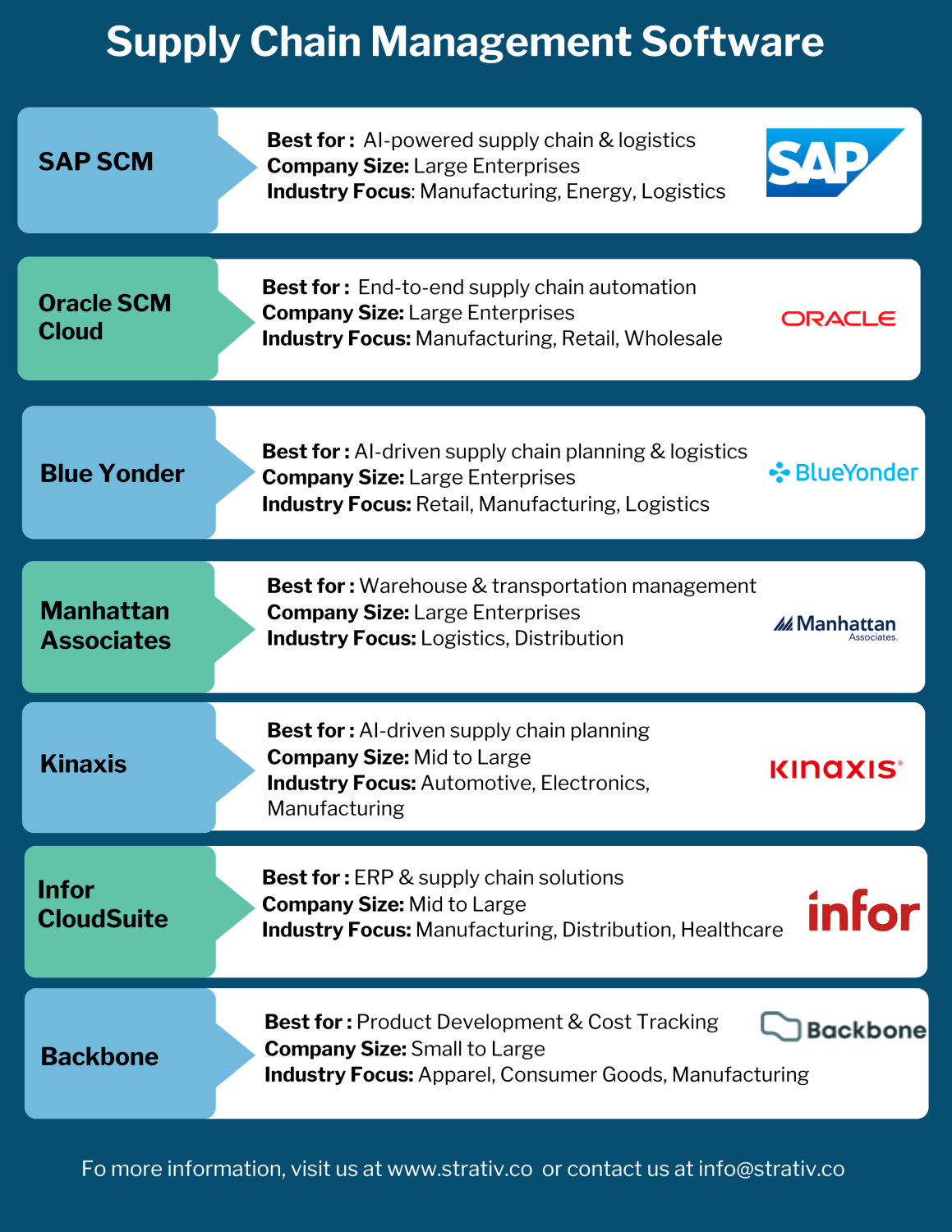
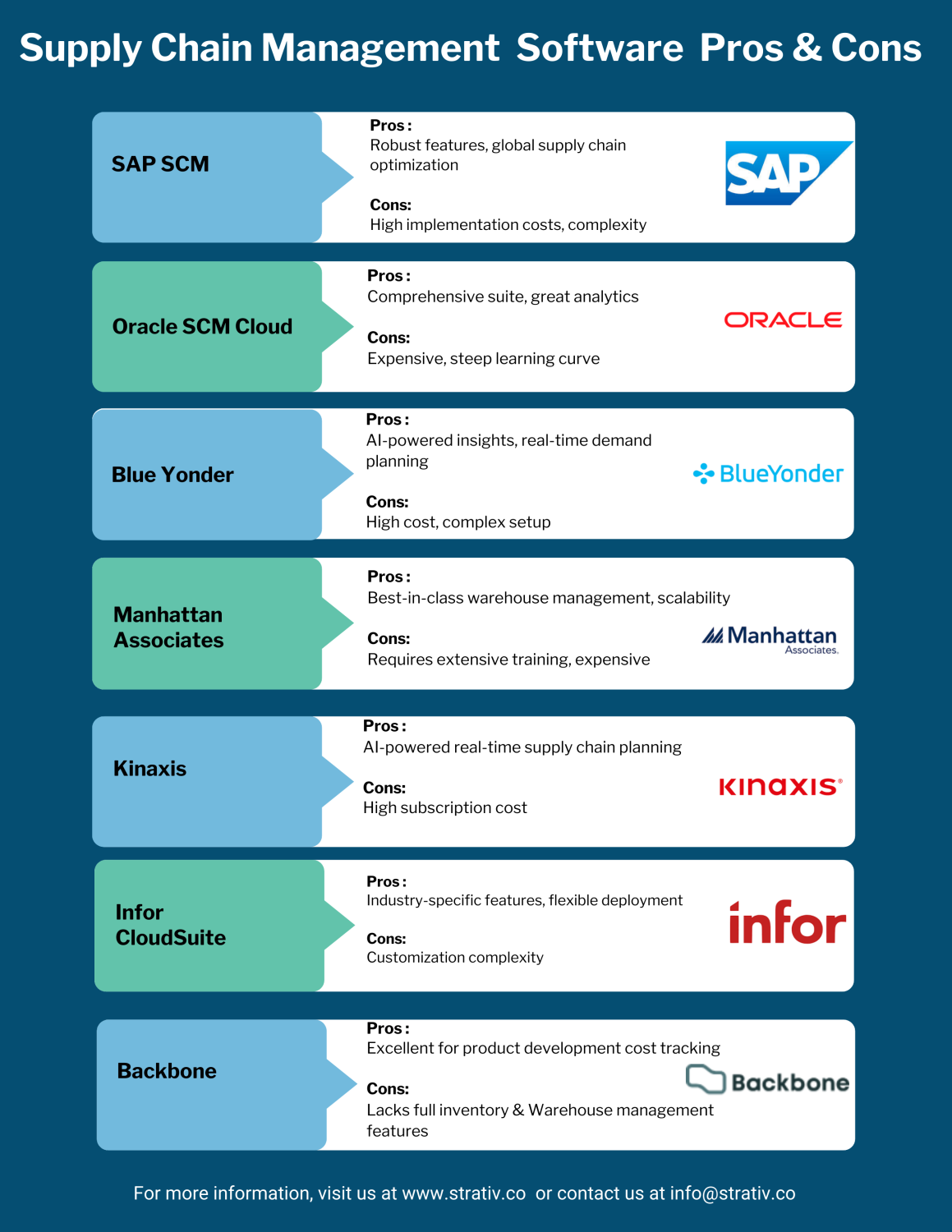
SAP SCM: Offers a comprehensive suite of supply chain management solutions, including procurement, inventory management, transportation management, and warehouse management.
-
Oracle SCM Cloud: Provides a cloud-based platform for supply chain planning, execution, and visibility.
-
Blue Yonder: Offers AI-powered supply chain solutions, including demand forecasting, inventory optimization, and logistics optimization.
-
Kinaxis: Provides concurrent planning solutions for supply chain visibility and responsiveness.
-
Anaplan: Although mostly a planning tool, Anaplan also offers a connected planning platform for supply chain planning and execution.
Logistics & Freight Companies:
-
Descartes Systems: Specializes in logistics and transportation management solutions.
-
Magaya: Offers supply chain automation solutions for freight forwarders and logistics providers.
-
E2open: Also provides a cloud-based platform for supply chain collaboration and visibility, with a focus on logistics and transportation.
Retail & E-commerce:
-
RELEX Solutions: Offers AI-powered supply chain planning and optimization solutions for retailers.
-
ShipBob: Provides e-commerce fulfillment solutions, including order management, inventory management, and shipping.
-
Logility: Offers supply chain planning and optimization solutions with a focus on retail and e-commerce.
Key Considerations for Your Business
When selecting supply chain and inventory management software, CFOs should evaluate:
-
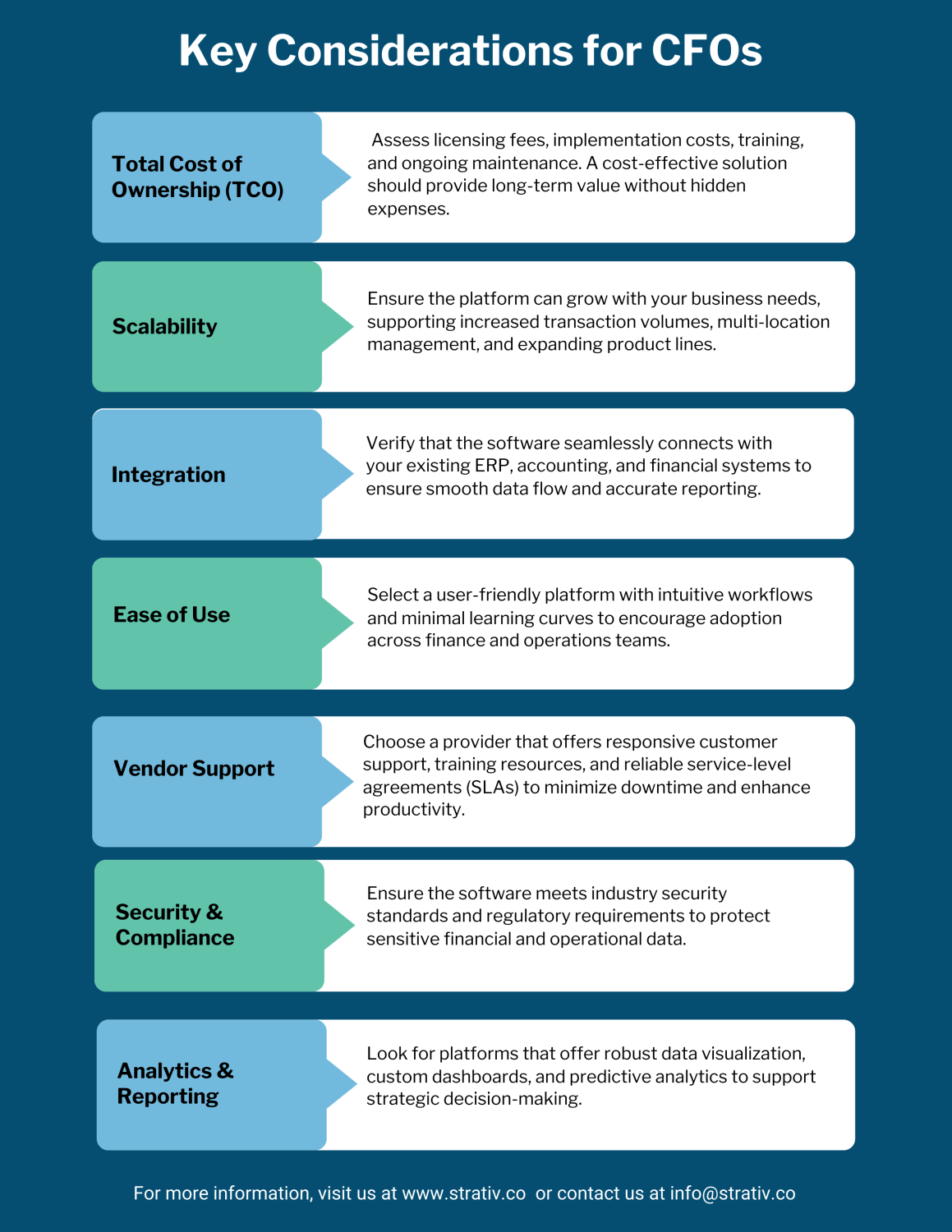
Total Cost of Ownership (TCO): Assess licensing fees, implementation costs, training, and ongoing maintenance. A cost-effective solution should provide long-term value without hidden expenses.
-
Scalability: Ensure the platform can grow with your business needs, supporting increased transaction volumes, multi-location management, and expanding product lines.
-
Integration: Verify that the software seamlessly connects with your existing ERP, accounting, and financial systems to ensure smooth data flow and accurate reporting.
-
Ease of Use: Select a user-friendly platform with intuitive workflows and minimal learning curves to encourage adoption across finance and operations teams.
-
Vendor Support: Choose a provider that offers responsive customer support, training resources, and reliable service-level agreements (SLAs) to minimize downtime and enhance productivity.
-
Security & Compliance: Ensure the software meets industry security standards and regulatory requirements to protect sensitive financial and operational data.
-
Analytics & Reporting: Look for platforms that offer robust data visualization, custom dashboards, and predictive analytics to support strategic decision-making.
Sage Intacct: Integrated Inventory Management & Financial Insight
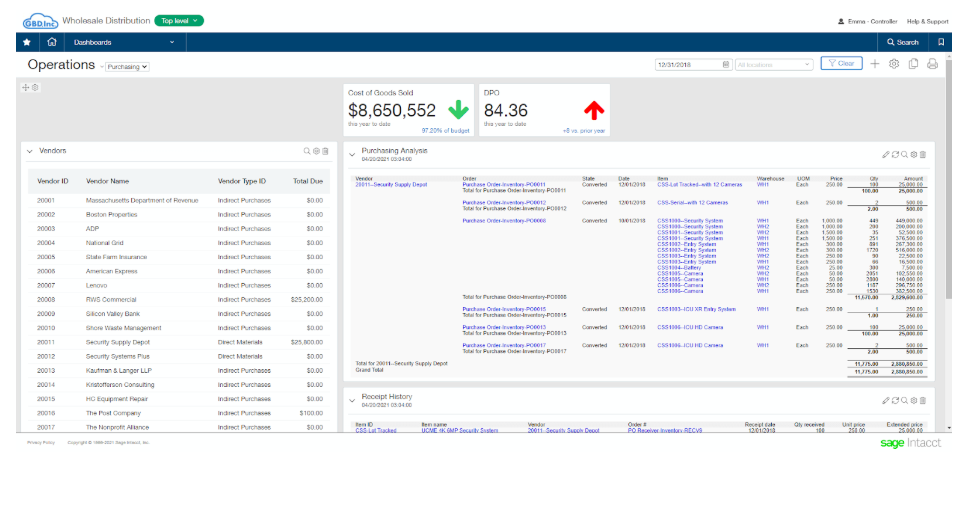
Sage Intacct connects inventory operations and financial management by integrating real-time inventory data with robust accounting functionality. Although renowned for its cloud-based financial management, its seamless connection with inventory systems makes it a powerful tool for CFOs seeking precise inventory valuation and efficient order management.
Key Inventory Management Capabilities:
-
Real-Time Inventory Visibility: Monitor stock levels, movements, and valuation to proactively manage overstock or shortages.
-
Seamless Financial Integration: Synchronize inventory transactions with core financial processes for accurate cost accounting and streamlined reporting.
-
Automated Order & Replenishment Management: Leverage real-time data to automate purchasing and reduce manual entry errors, ensuring optimal stock levels.
-
Actionable Analytics & Reporting: Gain insights into inventory turnover, cost of goods sold (COGS), and overall profitability through customizable dashboards.
Consider Sage Intacct for Inventory Management if:
-
You require an integrated solution that ties inventory operations directly into your financial system.
-
Real-time visibility into inventory levels and valuation is crucial for your decision-making.
-
Accurate tracking of stock movements and costs is key to reducing waste and optimizing cash flow.
-
Integration between inventory management and financial reporting supports your strategic growth objectives.
Backbone: Managing Product Development Costs
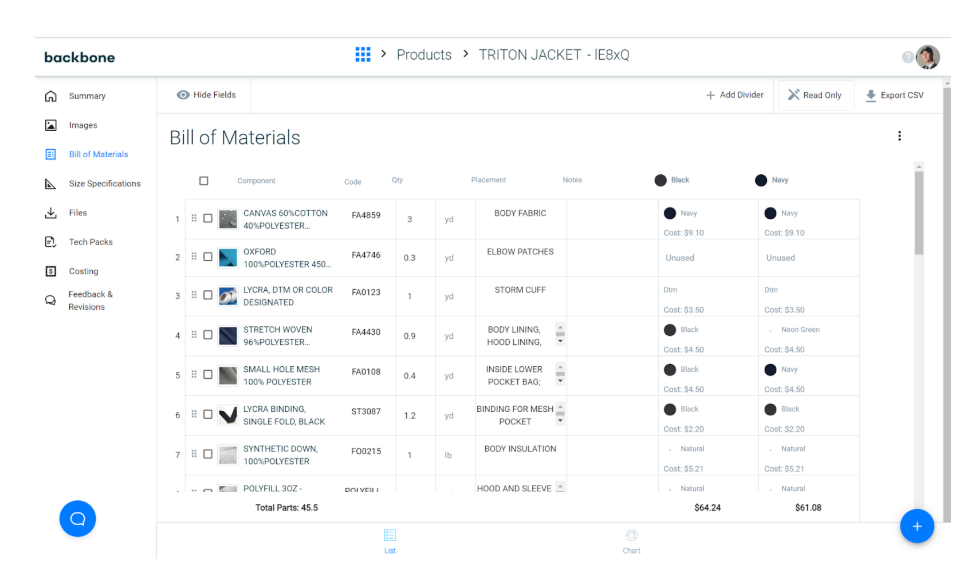
Backbone is a Product Lifecycle Management (PLM) system designed for companies that develop and manufacture products—particularly in apparel, consumer goods, and manufacturing. It centralizes product development, design, sourcing, and production data.
For finance leaders, the primary value of a PLM system like Backbone lies in its ability to improve cost visibility in the product development process. It helps with tracking materials, managing supplier costs, and streamlining design iterations before products enter full production. Note, however, that Backbone does not provide inventory or warehouse management features; companies typically integrate it with ERP or inventory systems.
Consider Backbone if:
-
Your company is focused on product development and design.
-
You need better cost tracking and supplier management.
-
You want to improve efficiency before products go into full production.
QStock: Warehouse & Inventory Control with QuickBooks & ERP Integration
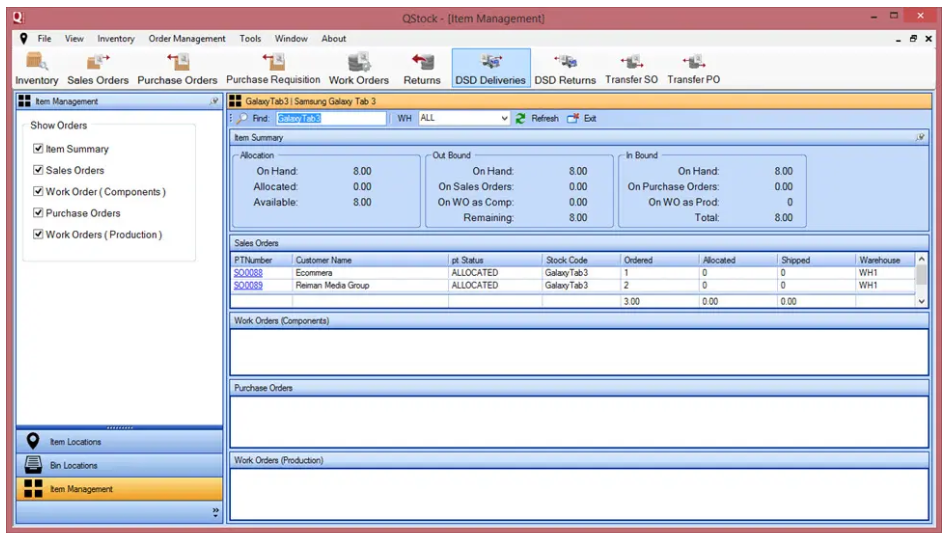
QStock is an inventory and warehouse management system that integrates with QuickBooks, NetSuite, and Acumatica. It offers real-time tracking of inventory, order fulfillment, barcode scanning, and warehouse automation.
For CFOs, the key financial benefit of a warehouse management system like QStock is its ability to improve inventory accuracy, reduce excess stock, and enhance order fulfillment efficiency. Its integration with financial software helps ensure that inventory costs are properly accounted for, minimizing discrepancies between operations and financial reporting.
Consider QStock if:
-
Your company relies on QuickBooks or an ERP but needs enhanced inventory control.
-
You require real-time tracking for inventory and warehouse operations.
-
You are looking to reduce order errors and optimize fulfillment processes.
Scanco: Warehouse & Manufacturing Automation for Sage ERP
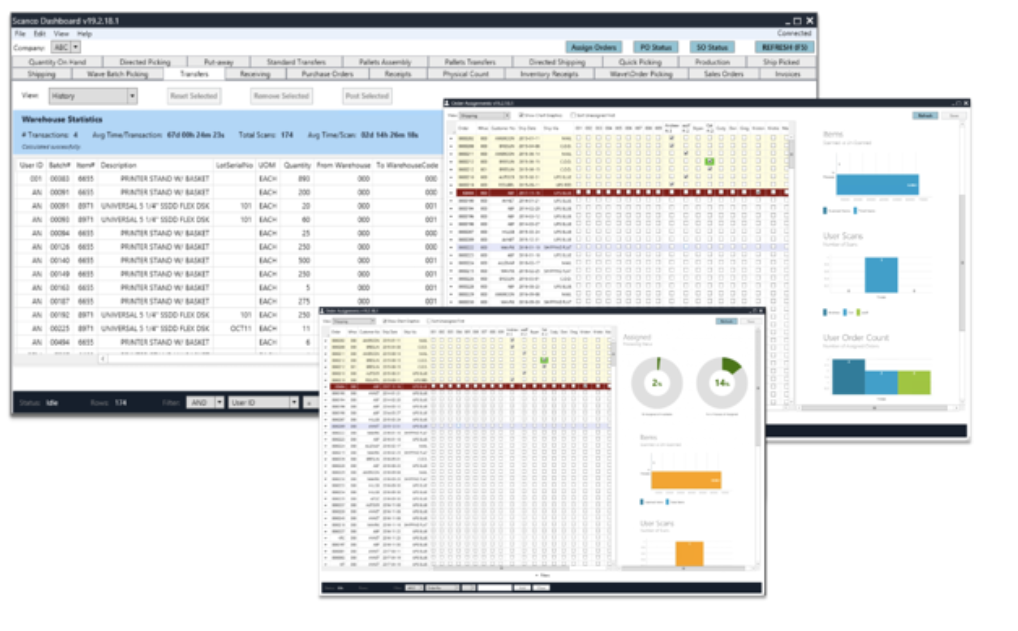
Scanco provides warehouse and manufacturing automation tools specifically for companies using Sage ERP (such as Sage 100, Sage 500, Sage X3). It includes barcode scanning, RFID tracking, and automation for warehouse and manufacturing processes.
From a financial perspective, automation with Scanco reduces manual labor costs, improves order accuracy, and enhances visibility into production and inventory levels. For CFOs managing manufacturing or distribution, Scanco helps ensure better control over stock movements, minimizes shrinkage, and integrates real-time data into financial planning.
Consider Scanco if:
-
Your company uses Sage ERP and needs advanced warehouse automation.
-
You want to improve inventory accuracy with barcode/RFID tracking.
-
You are looking to optimize manufacturing processes with real-time data.
For CFOs, selecting the right supply chain and inventory management software is a strategic decision that impacts cash flow, operational efficiency, and scalability. While large enterprises benefit from AI-driven automation, SMBs need cost-effective and intuitive platforms that scale with growth.
CFO Tip: Always evaluate total cost of ownership (TCO)—including licensing fees, implementation costs, training, and ongoing maintenance—before committing to a platform. Distinguishing between your inventory management and supply chain needs ensures your investment drives maximum ROI.
The CFO's Strategic Advantage
By distinguishing between inventory management and supply chain needs and evaluating the total cost of ownership, CFOs can make informed decisions that maximize ROI and drive long-term business success. Investing in the right supply chain and inventory management software is an investment in your company's financial future.
Supply chain and inventory management software is critical for optimizing operations, reducing costs, and ensuring efficiency across business functions. Selecting the right solution depends on company size, industry, and unique operational needs.
Understanding the Difference
-
Inventory Management: Focuses on tracking and managing stock levels, optimizing storage, and ensuring efficient order fulfillment within the organization.
-
Supply Chain Management: Encompasses the entire process—from sourcing raw materials to delivering finished products to the end customer—involving multiple parties and complex logistics.
Pros & Cons of Each Platform
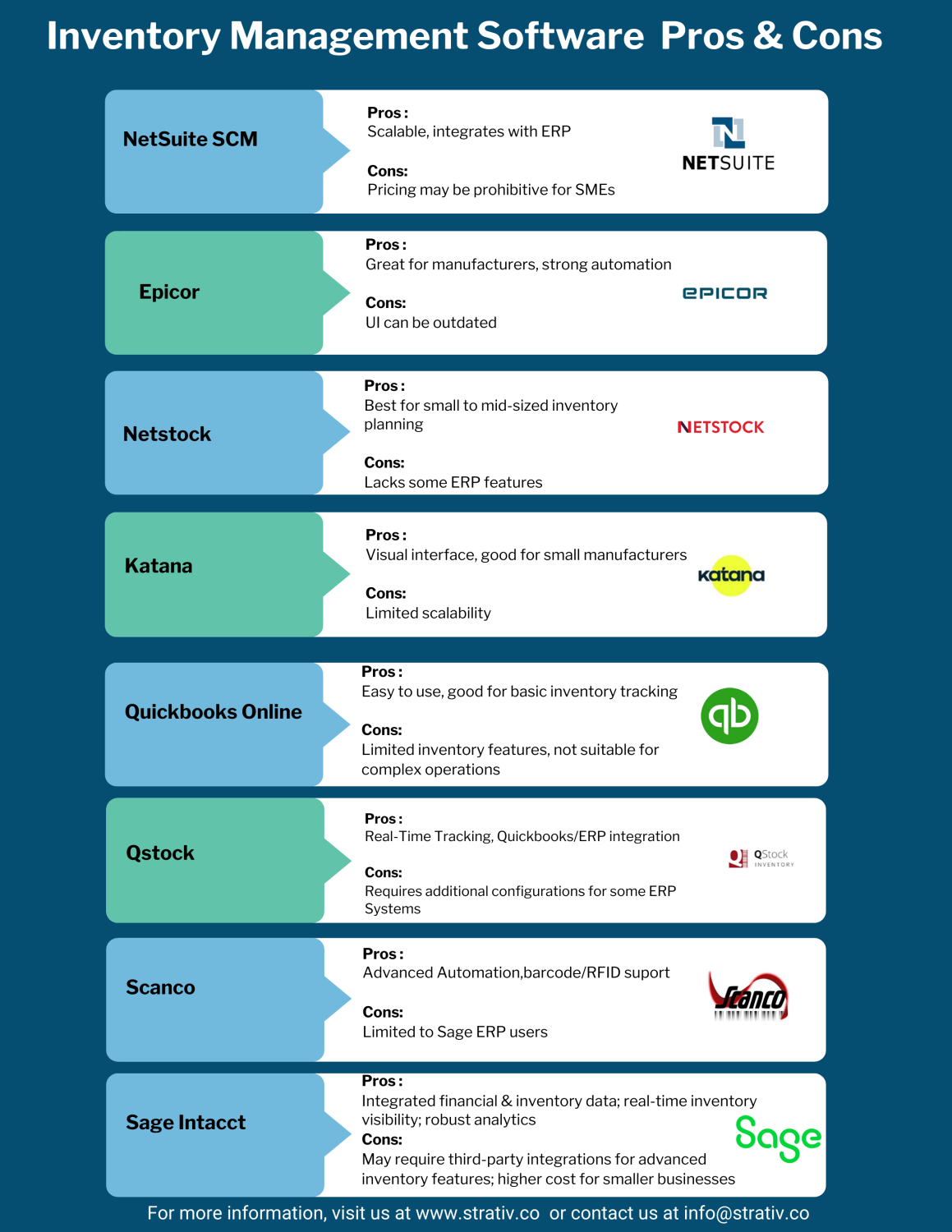
Inventory Management Software: Pros & Cons
Supply Chain Management Software: Pros & Cons
Case Study: Integration at a Water Filtration Technology Company
At our colleague's water filtration technology company—where reverse osmosis is central to our process of filtrating, concentrating, and separating components for clean water usage—we recognize that integration between manufacturing operations and financial management is key.
With facilities in both China and the U.S. and a customer base that spans industrial applications and a growing consumer branch, adoption of Sage Intacct has enabled us to achieve operational precision and better financial oversight.
Sage Intacct’s real-time production data capabilities helped optimize the production schedules and resource allocation. This has allowed us to fine-tune every step of manufacturing—from assembling intricate filter membranes to performing final quality checks—ensuring that our reverse osmosis units run efficiently with minimized downtime and reduced operating costs.
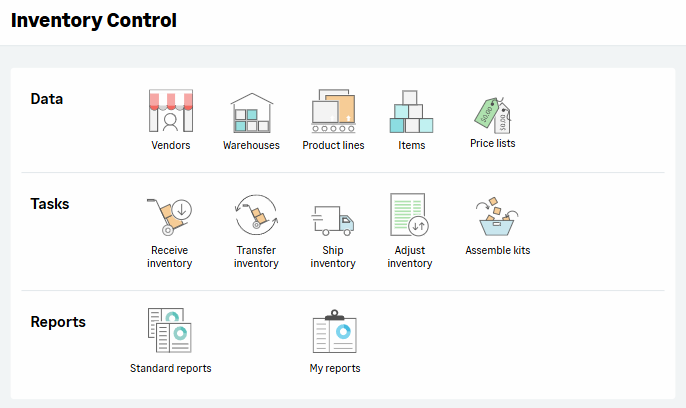
Our operations depend on specialized components such as advanced membranes and precision-engineered housings. Sage Intacct provides a comprehensive view of our inventory across multiple locations, ensuring we maintain optimal stock levels while avoiding overstocking and waste. This tight control over inventory not only supports continuous production but also improves our cash flow management—an essential factor as we serve both established industrial clients and expand into the consumer market.
On the financial side, Intacct’s machine learning algorithms analyze historical data to generate accurate forecasts of cash flows and budget variances. This predictive capability has been invaluable, enabling our finance team to make informed decisions whether scaling up production for industrial orders or planning new product lines for the consumer sector.
In addition, the accelerated financial close process has allowed the accounting team to transition from routine reconciliations to more strategic financial analysis.
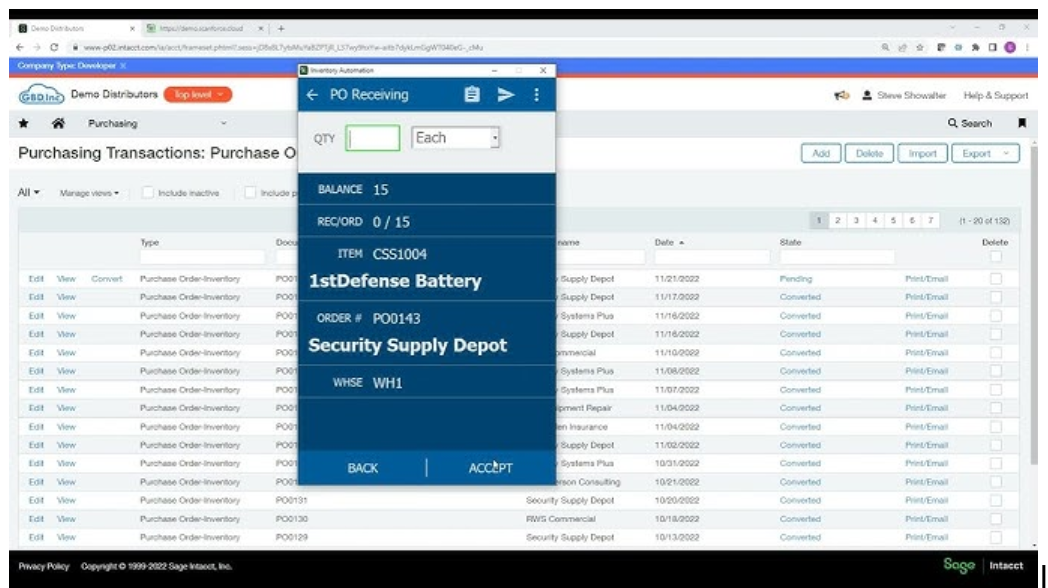
The dashboard also helps by giving us visibility into our supply chain. This enables us to monitor raw material levels, supplier performance, and production schedules, ensuring that any potential disruptions are quickly identified and managed. Integrated quality control metrics further enhance this process, enabling us to track product defect trends and promptly implement corrective measures, minimizing costs related to returns or warranty claims.
Intacct has become a key part of our tech stack by integrating key manufacturing processes with our financial systems. This integration not only improves operational efficiency and resource management but also provides the transparency needed for strategic decision-making as we continue to innovate and expand our market reach.
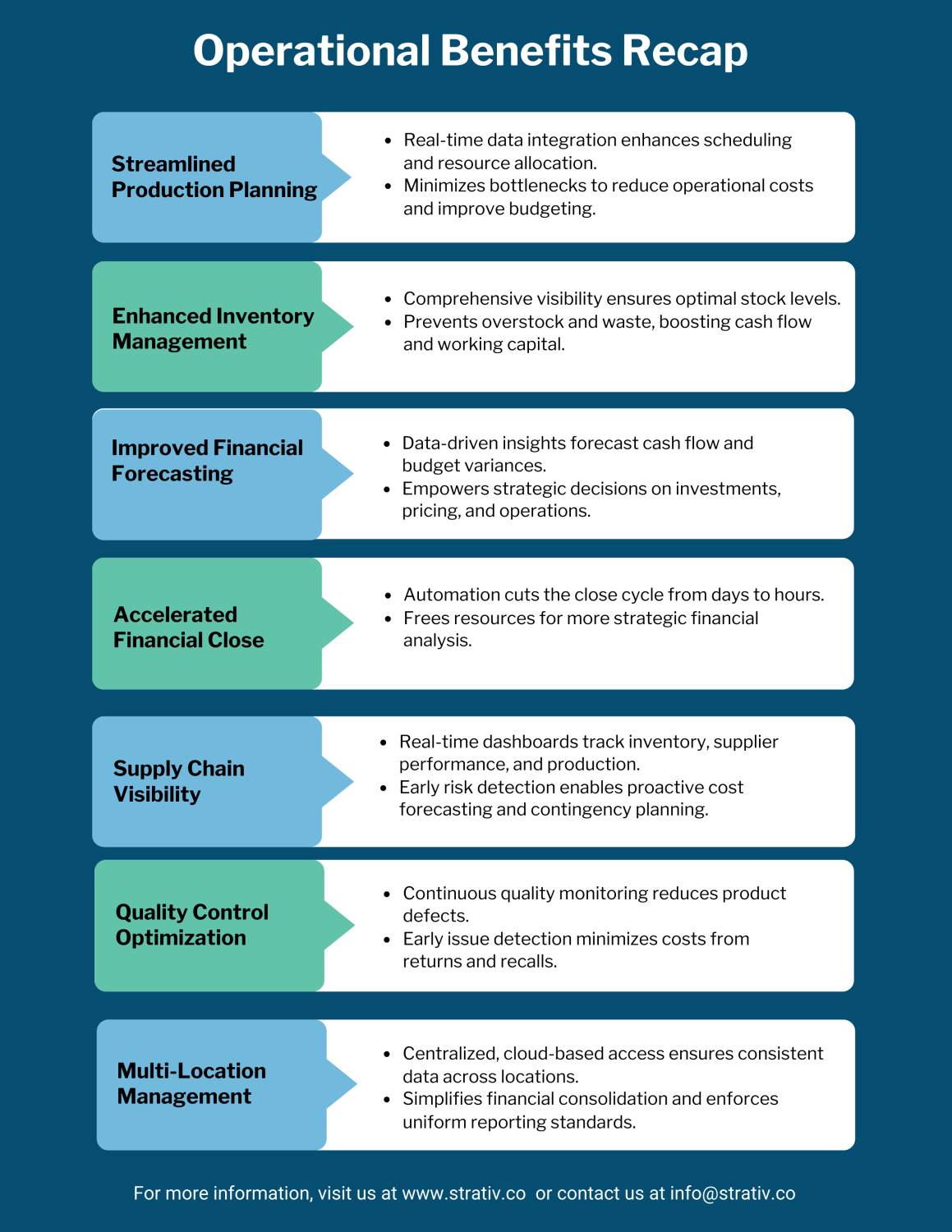
Operational Benefits Recap
Streamlined Production Planning
-
Operational Insight: Real-time production data integration allows for more accurate resource allocation and scheduling.
-
Financial Impact: By minimizing production bottlenecks, the system reduces operational costs, directly improving expense management and budgeting accuracy.
Enhanced Inventory Management
-
Inventory Visibility: A comprehensive view of raw materials and finished goods helps in maintaining optimal inventory levels.
-
Financial Control: This oversight supports more effective working capital management by preventing overstocking and reducing waste, leading to better cash flow management and cost reduction.
Improved Financial Forecasting
-
Data-Driven Predictions: Machine learning algorithms analyze historical data to predict future cash flows, budget variances, and other key financial metrics.
-
Strategic Decision-Making: These insights enable the finance team to make informed decisions about investments, pricing, and operational adjustments based on anticipated trends.
Accelerated Financial Close
-
Process Efficiency: Automation in accounting processes can reduce the financial close cycle significantly—from a process that might traditionally take ten days to potentially four days.
-
Resource Allocation: A faster close allows the finance team to reallocate time and resources from routine reconciliations to more strategic financial analysis.
Supply Chain Visibility
-
Real-Time Monitoring: Dashboards that track raw material levels, supplier performance, and production schedules offer a clear view of the supply chain.
-
Risk Management: This visibility enables the finance department to identify potential supply risks early, allowing for better cost forecasting and contingency planning.
Quality Control Optimization
-
Metrics Tracking: Integration of quality control data allows for continuous monitoring of product defect trends.
-
Financial Relevance: Early detection of quality issues can minimize costs associated with returns, warranty claims, and recalls by ensuring that quality standards are maintained throughout production.
Multi-Location Management
-
Centralized Access: Sage Intacct’s cloud-native platform provides consistent access to financial and operational data across multiple locations.
-
Consolidation Benefits: This reduces the need for disparate systems and simplifies the financial consolidation process, which is beneficial for maintaining uniform accounting practices and reporting standards.
By selecting and integrating the right supply chain and inventory management software, CFOs can drive operational efficiency, improve financial forecasting, and secure a strategic advantage.
Go deeper: Guide 19, Manufacturing Finance & Metrics, part of the CFO Guide Series: 24 one-page guides for CEOs and founders.
