
IPOs Gone Bad, Avoiding Problems with a little help from AI
Learning from IPO Flops
Going public is often seen as the ultimate milestone for a company, a moment where years of hard work culminate in a highly anticipated debut on the stock market. However, an IPO does not guarantee long-term success. Several high-profile companies have struggled after going public, proving that execution, timing, and investor confidence play critical roles in determining post-IPO performance.
Casper Sleep Inc. entered the market in 2020 as a pioneer of the "mattress-in-a-box" model. However, instead of a blockbuster debut, the company faced a sobering reality—its IPO valuation was far lower than initially expected. Investors were wary of Casper’s ability to turn a profit in an increasingly competitive mattress industry, dampening enthusiasm for the stock.

Uber, a giant in the ride-sharing space, also faced a rocky start when it went public in 2019. Despite its dominance, Uber’s IPO fell short of expectations, with its stock struggling in early trading. Concerns about profitability, regulatory battles, and mounting losses cast doubt on its long-term viability, leaving investors uncertain.

SmileDirectClub’s 2019 IPO was nothing short of disastrous. On its first day of trading, the stock price plummeted, marking one of the worst IPO debuts in decades. The company’s direct-to-consumer teledentistry model raised significant regulatory concerns, which ultimately eroded investor confidence.

Robinhood, the trading app that revolutionized commission-free stock trading, was one of the most anticipated IPOs of 2021. However, regulatory scrutiny and slowing user growth quickly took a toll, causing its stock to falter soon after its public debut.

While some companies stumbled post-IPO, others never even made it to the starting line.
WeWork’s highly anticipated 2019 IPO was a spectacular failure before it even happened. Once valued at $47 billion, the company’s attempt to go public unraveled amid revelations of questionable corporate governance, excessive losses, and controversy surrounding its CEO. The IPO was scrapped, and WeWork became a cautionary tale of unchecked ambition and poor financial discipline.

Peloton had a strong IPO in 2019, fueled by the surge in at-home fitness demand during the pandemic. However, when lockdowns eased and consumer habits shifted, the company’s stock took a dramatic plunge in 2021. Safety recalls and growing competition only added to its troubles, further eroding its once-lofty valuation.

Beyond Meat, a darling of the alternative protein industry, made an impressive public debut in 2019. Yet, despite its initial success, its stock later tumbled as competitors flooded the market and questions arose about its long-term growth potential.

Blue Apron, the meal kit delivery company, struggled almost immediately after its 2017 IPO. Customer retention issues, logistical challenges, and intense competition proved too much, causing its stock to decline sharply.

Zymergen, a synthetic biology company, had an especially brutal post-IPO experience in 2021. Shortly after going public, the company revealed that its flagship product was underperforming, triggering a massive selloff and raising serious doubts about the business.

Commit to a Rigorous Process: Get Your Systems Ready
Companies that invest in advanced ERP systems and reporting tools gain the capability to consolidate global operations and deliver real-time insights. These systems become the backbone of regulatory compliance and smooth public company operations.
Financial transparency builds investor trust. Markets demand crystal-clear visibility into a company's performance, requiring meticulous preparation of audited financials following GAAP or IFRS standards. Revenue recognition must align perfectly with ASC 606, while equity structures need careful attention to prevent complications. Each financial record tells part of the company's story, and that story must be impeccable.
Here's a checklist from KPMG:
Have The Right Metrics
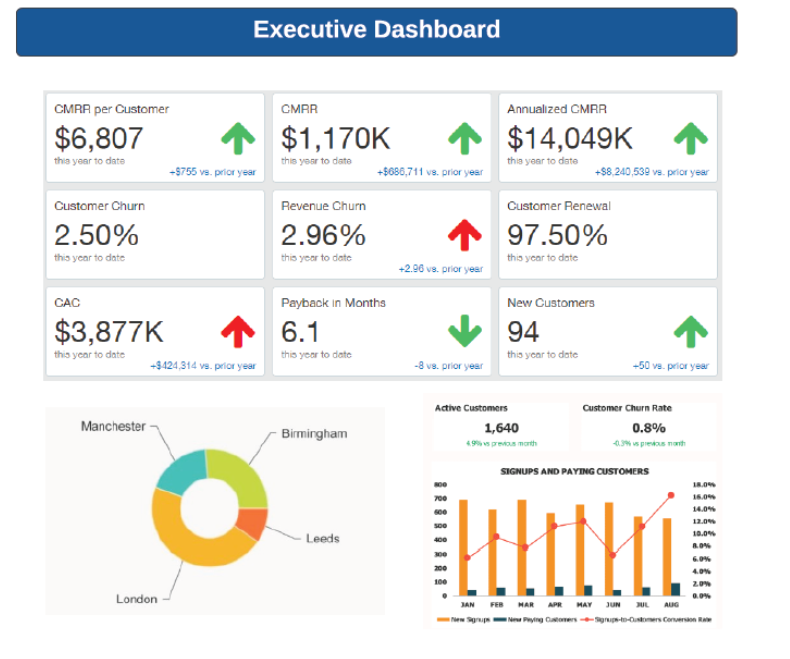
Numbers drive the narrative. Public investors scrutinize metrics that reveal a company's potential for scale and profitability. Growth rates, margins, and cash flow paint a picture of operational health. Customer acquisition costs and lifetime value demonstrate market strategy success. Debt ratios and working capital reveal financial stability. Together, these metrics weave a data-driven story of the company's trajectory.
Craft An Investment Narrative That Works
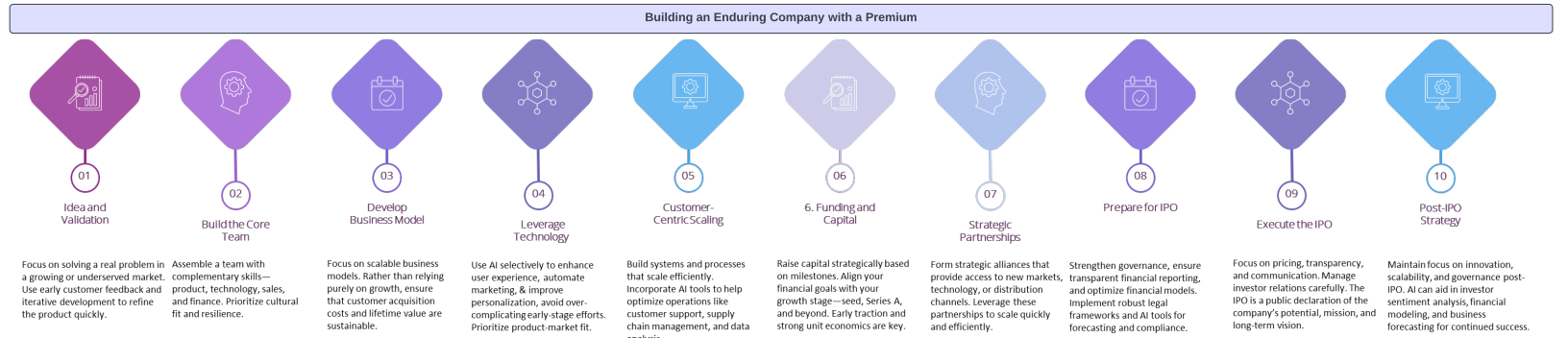
Markets need to understand not just what a company does, but why it matters. This means articulating clear competitive advantages, demonstrating deep market understanding, and mapping a convincing path to sustained growth. The most successful IPOs combine visionary potential with financial fundamentals, showing investors both what the company is today and what it can become tomorrow.
Use AI as a tool for your IPO
Implement AI-powered investor sentiment analysis to predict market reactions pre-IPO. AI can monitor social media, news articles, and analyst reports to provide real-time insights into investor sentiment. Companies can leverage these insights to refine their messaging, address market concerns, and optimize their timing for public offerings. Nothing beats talking to real people but you will get a sense of what investors are thinking.
Use AI-driven automation to streamline SEC filing processes, reducing errors and enhancing efficiency. AI can automate form generation, document verification, and submission tracking, allowing finance teams to focus on strategic IPO preparations rather than administrative tasks. A.I. can check your S-1 for errors and consistency, of course you want the lawyers and bankers involved but it can save you time and money for the tedious stuff.
Here's a good read on how AI Can help the IPO readiness process from Nasdaq:
Make Sure You Crush Your First Quarter!
It goes without saying—you need to beat and raise your first quarter as a public company. AI-powered financial forecasting using deep learning models, can fine-tune revenue predictions as you plan your scenarios. These AI-based scenario modeling can helps identify risks and opportunities ahead of time, allowing companies to build sufficient financial cushion and ensure a strong debut. Beat and raise, this is something one must do. Investor confidence hinges on meeting or exceeding expectations—so beat the numbers and raise guidance.
Best-in-Class SaaS Metrics: Reporting the Right Details
Companies preparing for an IPO must track critical SaaS metrics to demonstrate financial health and growth potential. Some of the most important metrics include:
-
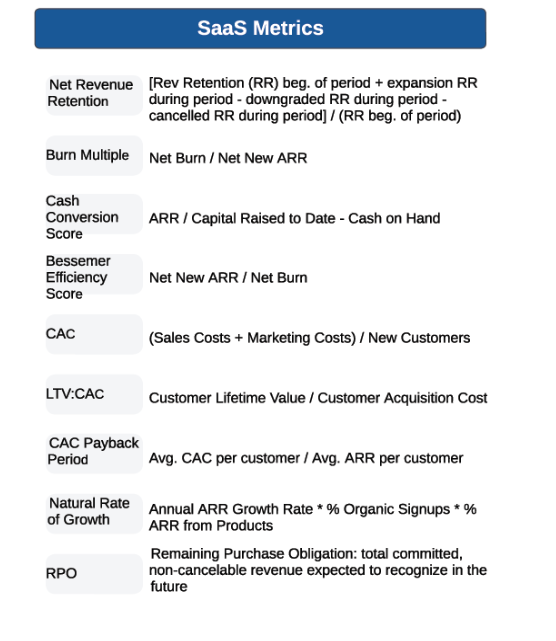
Net Dollar Retention Rate (NDRR): Measures the percentage of revenue retained from existing customers over a period, including upsells, renewals, and churn. A high NDRR (typically above 140%) indicates strong customer retention and expansion, reflecting the long-term value of existing clients. AI-powered analytics can help businesses segment customers and identify factors influencing retention, thereby improving this metric.
-
Revenue Performance Obligations (RPO): Represents contracted revenue that is yet to be recognized, offering visibility into future financial performance. RPO is critical for SaaS companies as it highlights long-term growth potential. AI-driven forecasting models can analyze past revenue trends, identify anomalies, and predict future revenue recognition more accurately, improving investor confidence.
-
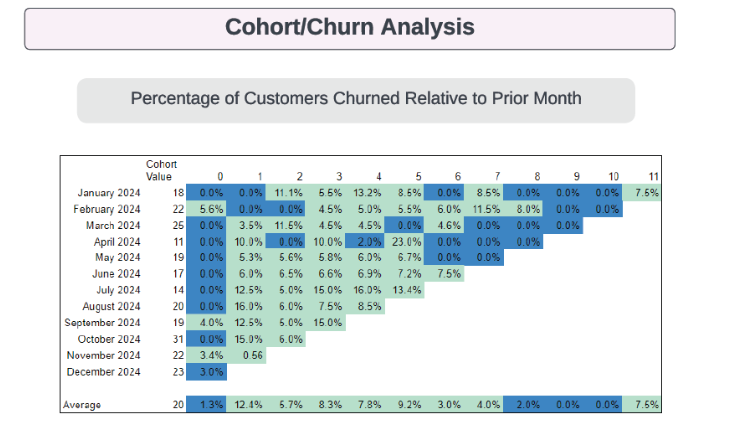
Cohort Analysis: Evaluates customer behavior over time by grouping them based on shared characteristics (e.g., acquisition date, region, or product type). AI-driven cohort analysis enhances customer insights, helping businesses identify engagement trends, reduce churn, and optimize pricing strategies. By analyzing user interactions, AI can recommend personalized engagement tactics to improve long-term customer retention.
-
Customer Acquisition Cost (CAC): Measures the cost incurred to acquire a new customer, including marketing and sales expenses. Lowering CAC while maintaining revenue growth is crucial for a successful IPO. AI-driven marketing automation, lead scoring, and predictive analytics can optimize marketing spend and enhance conversion rates, improving the efficiency of customer acquisition.
-
Gross Margin: GMs reflects a company's profitability and operational efficiency. AI can optimize pricing strategies, reduce operational inefficiencies, and automate cost control measures to improve gross margin, ensuring financial stability and investor attractiveness. Think about a company with 75% GMs vs someone with 80%, who will get the premium?
Real-World IPO Examples of Successful IPOs and Lessons Learned
Why Reddit’s IPO Was Successful
Reddit's IPO success was largely driven by its ability to monetize user engagement effectively. The platform leveraged AI-driven engagement metrics to showcase its advertising growth potential, demonstrating how its unique community-driven model could translate into revenue growth. Additionally, strong user-generated content and a dedicated user base provided a compelling value proposition, making investors confident in its long-term monetization strategy.

Why Investors Welcomed Astera Labs
Astera Labs attracted investors by positioning itself as a leader in high-speed connectivity solutions for AI and cloud computing. Its use of AI to optimize revenue recognition boosted investor confidence in its RPO growth. With the increasing demand for AI infrastructure, Astera Labs' role in accelerating data movement across cloud ecosystems made it a highly attractive bet in the IPO market.

I Gotta Have Ibotta
Ibotta's IPO success was fueled by its strong customer retention and revenue stability. By leveraging AI-based cohort analysis, the company highlighted its ability to maintain high user engagement and repeat transactions, ensuring predictable revenue streams. As a cash-back rewards platform with a proven business model, Ibotta resonated with investors looking for a strong mix of growth potential and financial stability.

Go Public with Confidence
In 2025, companies preparing for IPOs can no longer rely solely on traditional financial practices. AI is transforming financial reporting, forecasting, and compliance, making IPO readiness more efficient and accurate. Your team will Still need to do the due diligence, the sanity check and help craft the story behind the numbers. Use the right tools but in the end, tools are just tools.
Go deeper: Guide 09, Building an Equity Premium, part of the CFO Guide Series: 24 one-page guides for CEOs and founders.
