
How to Raise Money for Your Startup: A Comprehensive Guide
It’s not just about getting cash into the business; it’s about finding the right partners, crafting deals that align with your vision, and positioning your company for long-term success. This investment guide dives deep into every aspect of fundraising, providing practical advice and insights that founders can use at every stage. Here’s what you’ll find inside:
The Diverse Sources of Funding
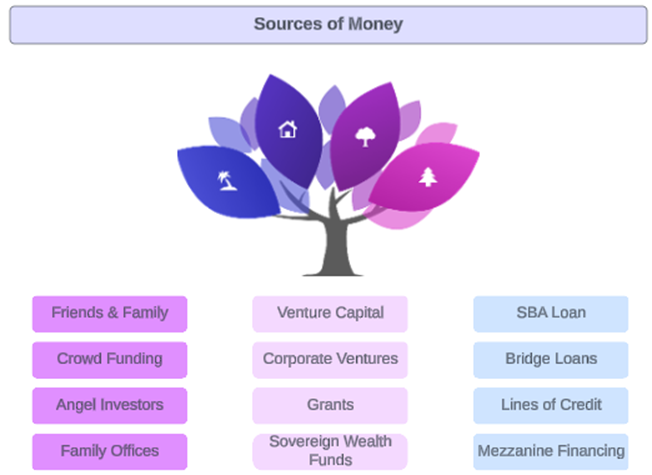
One of the first steps in fundraising is understanding where the money comes from. Our guide provides a thorough overview of funding sources:
-
Angel Investors: Ideal for startups in their early stages, these investors bring not only capital but also mentorship and connections.
-
Venture Capital (VC): For startups ready to scale, VCs offer significant funding and expertise in exchange for equity.
-
Corporate Ventures: Explore strategic partnerships with corporate investors like Google Ventures or Samsung NEXT.
-
Family Offices: Long-term investors who prioritize stability and growth.
-
Sovereign Wealth Funds: Deep-pocketed funds, such as the Norway Government Pension Fund or Singapore’s Temasek Holdings.
-
Grants: Non-dilutive funding options that can provide critical resources without giving up equity.
-
Friends & Family: Often the first step for many startups, these investments come with both opportunities and risks.
Types of Financing
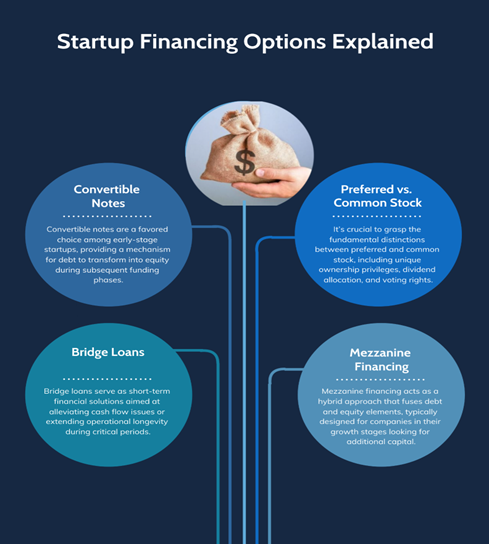
Once you know where to find funding, you need to understand how to structure it. Our guide unpacks the various financing options:
-
Convertible Notes: A popular tool for early-stage startups, allowing debt to convert to equity in future funding rounds.
-
Preferred Stock vs. Common Stock: Understand the differences and why investors often demand preferred stock.
-
Bridge Loans: Short-term financing to manage cash flow or extend your runway.
-
Mezzanine Financing: A hybrid option combining debt and equity, typically for later-stage companies.
Valuation and Dilution Demystified
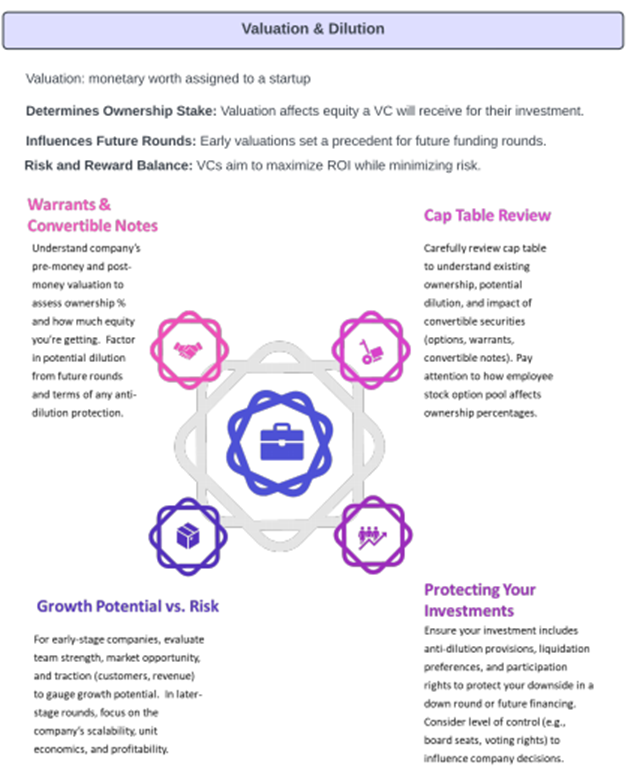
Your company’s valuation can shape everything from investor interest to your future fundraising ability.
-
Pre-Money vs. Post-Money Valuation: Learn how valuations impact ownership and deal negotiations.
-
Dilution: Understand how fundraising affects your equity and how to manage it strategically.
-
Cap Table Basics: Stay on top of ownership dynamics as your company grows.
The Anatomy of a Term Sheet
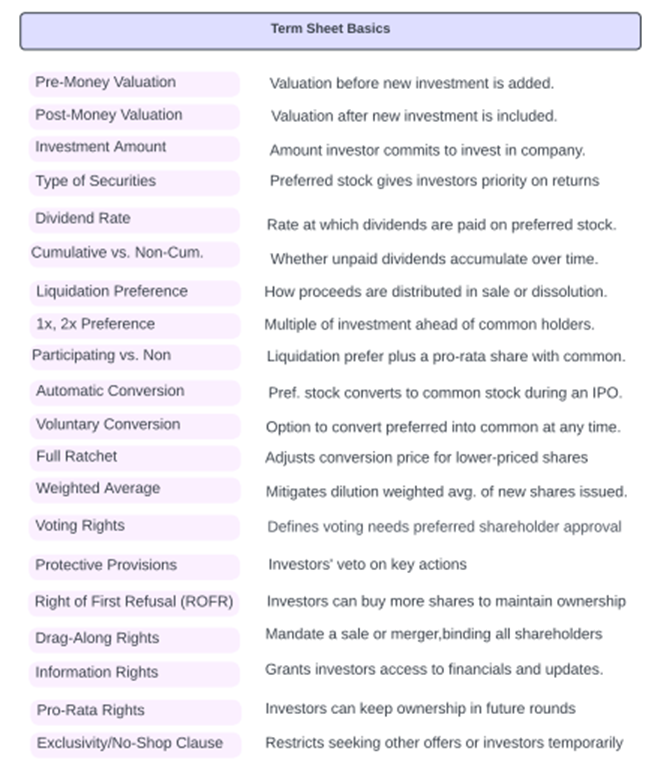
Negotiating with investors starts with the term sheet, a document that can define your company’s trajectory.
-
Liquidation Preferences: Ensure you know how returns will be distributed in a sale or liquidation event.
-
Voting Rights: Balancing investor influence and founder control.
-
Pro-Rata Rights: Protect investors’ ability to maintain their ownership stakes.
-
Drag-Along and Right of First Refusal (ROFR): Mechanisms that align stakeholders during critical decisions.
-
Anti-Dilution Protections: Shield investors from share price reductions in future rounds.
Mastering the Investor Landscape
Every funding source comes with its own set of players and nuances. Our guide breaks down the major players:
-
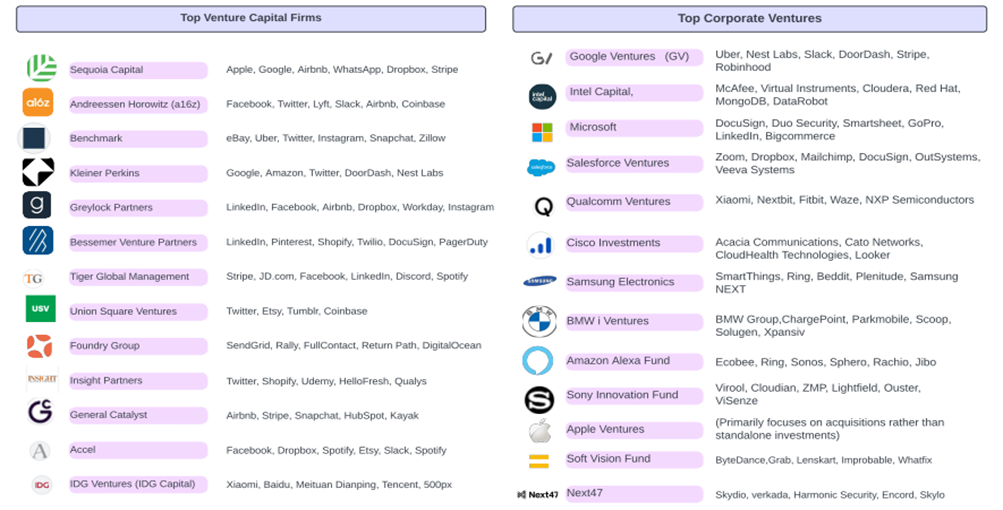
Top Venture Capital Firms: From Sequoia Capital to Andreessen Horowitz, learn about the firms that dominate the startup ecosystem.
-
Corporate Ventures: Discover how companies like Amazon, Salesforce, and BMW invest in startups to foster innovation.
-
Impact-Focused VCs: Explore firms prioritizing social and environmental outcomes alongside financial returns.
-
Growth-Stage and Late-Stage VCs: When scaling becomes your focus, these firms step in to fuel your expansion.
Crowdfunding: A Modern Approach
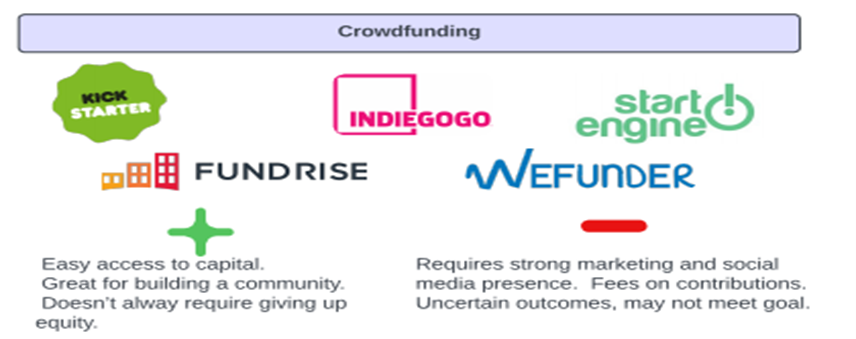
Crowdfunding combines funding with community building, but it’s not without its challenges. Our guide provides an honest look at:
-
Benefits: Tap into your audience for capital and engagement without giving up equity.
-
Challenges: Prepare for high marketing demands and the possibility of falling short of your funding goals.
The Path to an Exit
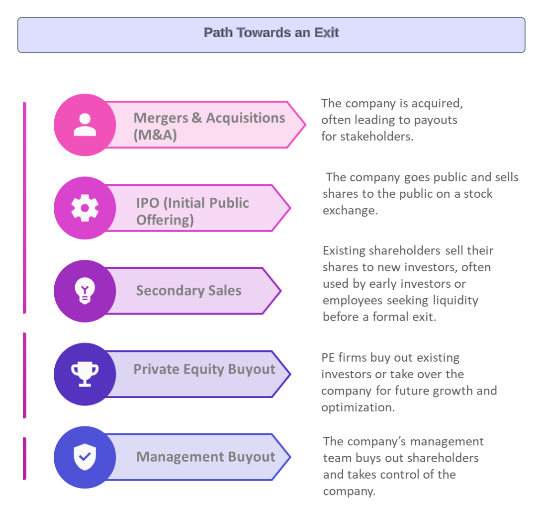
Every founder needs to think about the long-term, including how to plan for an eventual exit.
-
Acquisitions, IPOs, and Recapitalization: The main paths to liquidity and how to prepare for them.
-
Strategies for Maximizing Value: Position your company to attract the right buyers or investors.
Making the Perfect Pitch
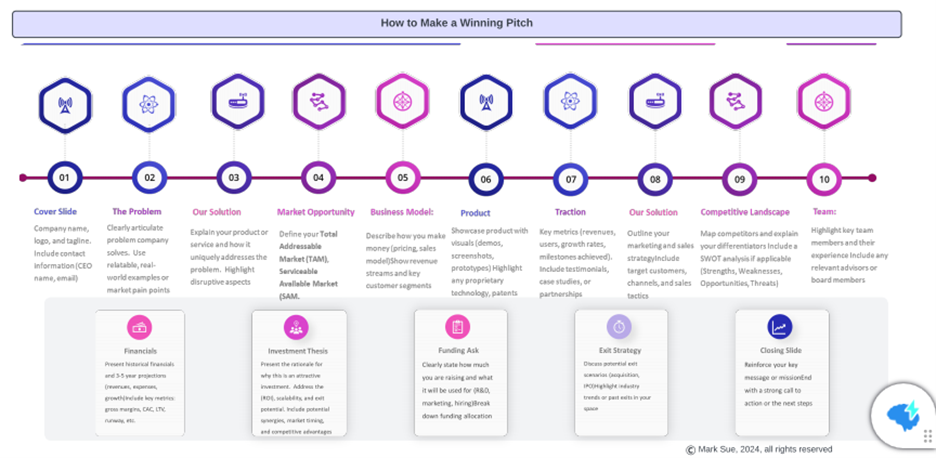
A compelling pitch can make or break your fundraising efforts.
-
Structuring Your Pitch: Showcase your market opportunity, traction, and team in a way that resonates.
-
Preparing for Questions: Anticipate investor concerns and respond confidently.
-
Telling Your Story: Craft a narrative that not only informs but inspires.
Critical Pitfalls and How to Avoid Them
With opportunity comes risk. Our guide sheds light on common mistakes founders make:
-
Dirty Term Sheet Items: Learn how to identify and negotiate unfavorable terms.
-
Employee Stock Options: Set up incentives for your team without overburdening your cap table.
Additional Key Topics
-
SBA Loans: Leveraging government-backed funding for startups.
-
Impact of Sovereign Wealth Funds: Understanding how these large-scale investors operate.
-
Cap Table Management: Tools and tips for keeping your equity structure clear and optimized.
Go deeper: Guide 07, Startup Fundraising, part of the CFO Guide Series: 24 one-page guides for CEOs and founders.
