
How to Have a Successful IPO in 2025
Going public is an exciting milestone for any company, but in 2025, it’s clear that the road to a successful IPO isn’t just about strong numbers. Today’s market is more competitive and fast-paced than ever, and companies need to do more than check the usual boxes. It’s about telling a compelling story, building trust with investors, and showing that you’re ready for long-term success. From navigating regulations to meeting market expectations, the process can feel overwhelming—but with the right approach, it’s entirely achievable. In this guide, we’ll walk you through the key steps and strategies to help make your IPO a success in 2025.
The Next Wave of IPOs: Opportunities and Considerations for 2025
The initial public offering (IPO) market is experiencing a resurgence with companies gearing up to go public in 2025. Success in this new environment requires more than strong financials—companies must strategically position themselves for long-term growth, manage investor expectations, and navigate evolving market conditions. Here are some notable upcoming US IPOs:
-
Stripe: Expected to be one of the most substantial IPOs of 2025, Stripe is projected to reach a valuation of approximately $65 billion. As a key player in the financial technology sector, Stripe’s IPO could present opportunities for those interested in this rapidly growing market. However, potential investors should carefully evaluate the competitive landscape and market volatility that may affect Stripe's post-IPO performance.
-
Medline Industries: A major player in the medical supply chain sector, Medline is preparing for a public listing with an estimated valuation of $50 billion. Its strong track record and global reach make it a compelling option for investors focused on the healthcare supply space.
-
Databricks: Known for its AI-driven data analytics platform, Databricks is targeting an IPO in early 2025. Following a recent $10 billion funding round, its valuation has climbed to $62 billion. This IPO could provide exposure to the rapidly growing AI and big data sectors, though investors should consider the risks associated with an evolving technology landscape.
-
Discord: Popular among gamers and community enthusiasts, Discord is rumored to go public in 2025 with a valuation of approximately $15 billion. This IPO offers exposure to the tech and social media sectors, presenting opportunities for those interested in communication platforms.
-
Klarna: As a leader in the "buy now, pay later" (BNPL) market, Klarna has reportedly filed for a US IPO in 2025. Valuations are expected to range between $6.7 billion and $14.6 billion. While the IPO could attract interest in the consumer finance space, investors should assess profitability concerns and regulatory challenges in the BNPL sector.
Key Trends Shaping IPOs in 2025
Several crucial factors influence IPO success vs prior years
-
Higher Scrutiny from Investors – Investors now demand clear paths to profitability rather than just rapid growth. Rates are coming down but the cost of capital is still high.
-
Shift Toward Quality Over Quantity – Markets favor profitable or near-profitable companies over high-burn-rate startups.
-
AI & Tech Dominance – AI-driven businesses attract strong valuations, but investors seek real revenue impact, not just hype.
-
Financial Discipline Matters More Than Ever – Investors expect detailed financial reporting, efficient operations, and resilient business models.
-
Retail Investor Influence – The rise of online trading platforms has increased retail participation, making investor relations crucial.
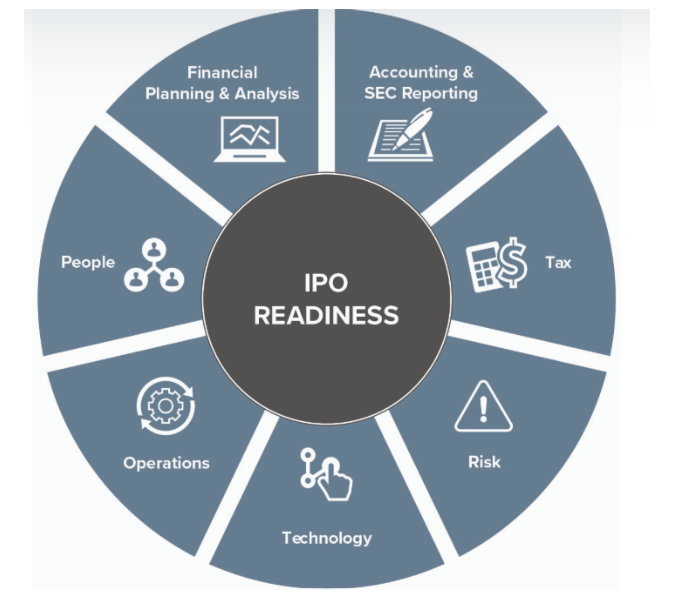
Steps to a Successful IPO in 2025
1. Define Your Investment Narrative
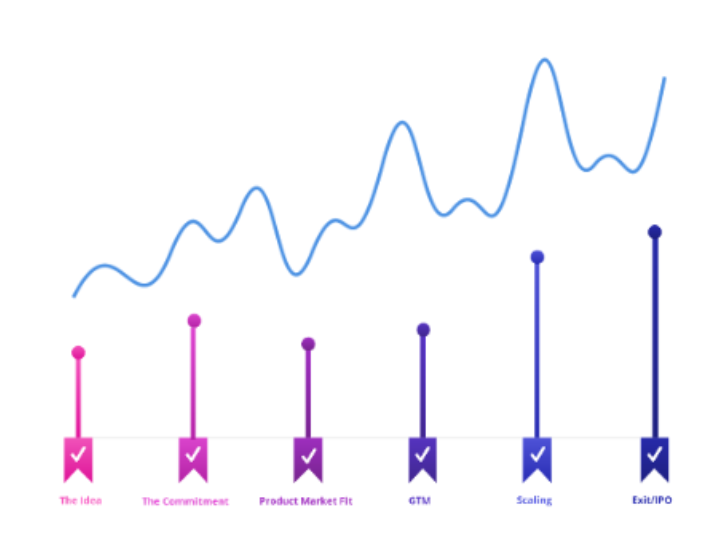
A compelling investment thesis and corporate narrative are crucial for a successful IPO. This narrative should focus on selling the company and instilling confidence in investors regarding your long-term vision and growth potential. The story reflects your company’s mission, values, and the unique value proposition it offers customers. You’ve come far from the idea stage to growing the business, now it’s about articulating why your company will win a disproportionate share of the market.
The Right Story: What Works?
An effective IPO story should encompass:
-
A Compelling Vision: Illustrate how your company is innovating within its industry. For instance, if you are in the renewable energy sector, explain how your technology contributes to sustainability and addresses climate change.
-
Tangible Proof of Market Demand: Demonstrate why this is the opportune moment for your public listing. Highlight market trends and consumer behavior that support your growth.
-
Financial Strength and Growth Trajectory: Present metrics related to revenue, unit economics, and profitability. Use data to show how you have achieved consistent growth over time.
-
Leadership Credibility: Highlight experienced founders and executives capable of executing the business strategy. Investors often look for strong leadership teams with a proven track record.
-
Market Opportunity – Define your total addressable market (TAM), industry dynamics, and future growth potential.
-
Regulatory Compliance – Ensure full compliance with industry-specific and governmental regulations to avoid post-IPO legal hurdles.
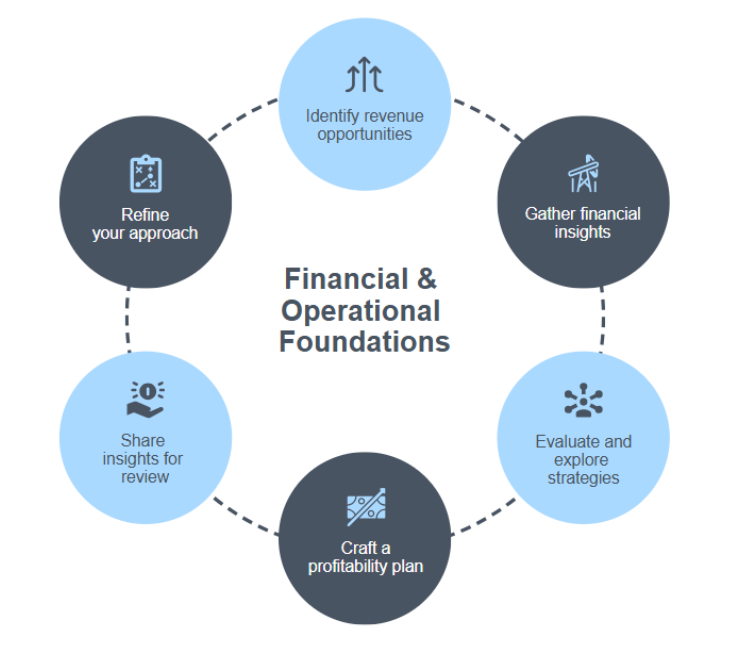
2. Strengthen Financial and Operational Foundations
A company must be financially and operationally ready before going public:
-
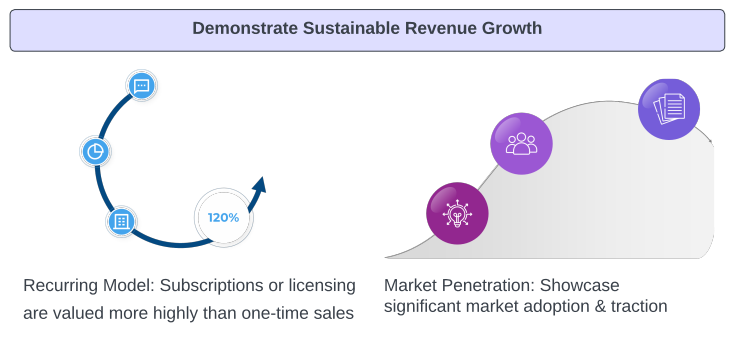
Revenue Growth & Profitability – IPO-ready firms should demonstrate consistent revenue growth and a clear path to profitability.
-
Financial Transparency – Prepare for intense regulatory scrutiny and SEC compliance by ensuring accurate and timely financial reporting, including GAAP-compliant statements and thorough audit records.
-
Robust Corporate Governance – Establish independent boards, define executive responsibilities, and implement clear ethical guidelines to promote transparency and investor trust.
-
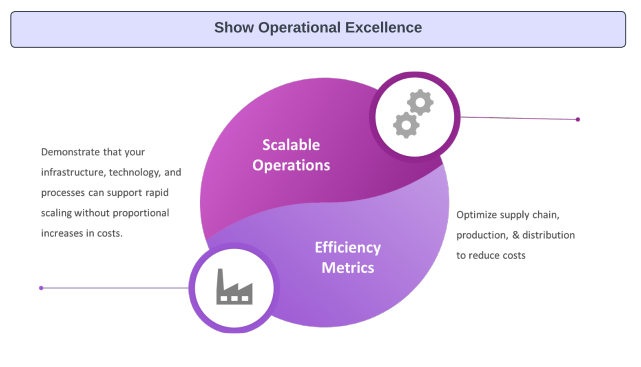
Operational Efficiency – Streamline business operations to ensure scalability and post-IPO growth, integrating automation and process improvements to optimize performance.
-
Cybersecurity Measures – Strengthen data security by implementing robust cybersecurity policies, compliance with industry standards (e.g., SOC 2, ISO 27001), and secure handling of sensitive financial information to mitigate risks of cyber threats and data breaches.
-
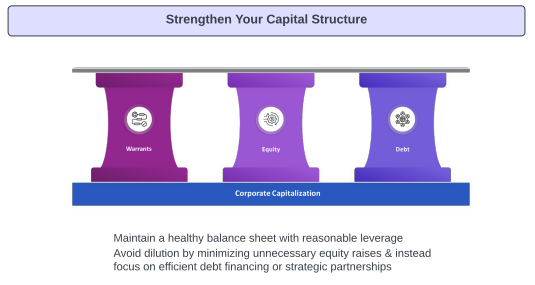
Liquidity Management – Ensure access to sufficient cash reserves to weather market volatility by maintaining a healthy balance sheet, optimizing working capital, and establishing credit lines to cushion against financial uncertainties.
-
Scalability and Market Readiness – Assess whether the company’s infrastructure, workforce, and technology can handle rapid expansion post-IPO, preparing for increased regulatory oversight and higher stakeholder expectations.
3. Build Investor Confidence Through Metrics
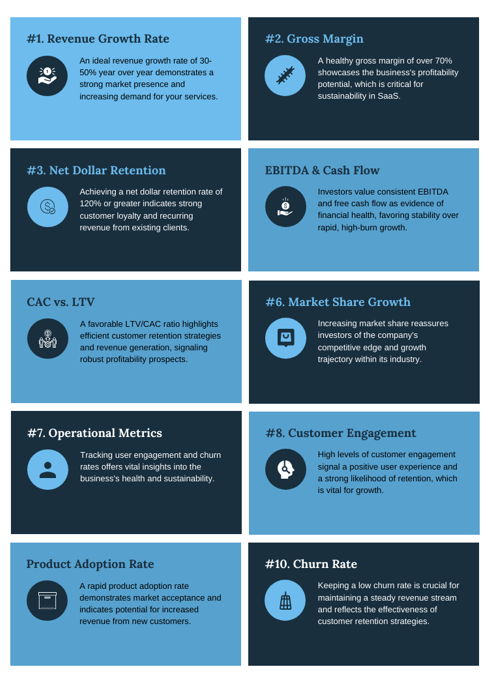
Investors rely on key performance indicators (KPIs) to gauge a company’s viability:
-
Revenue Growth Rate – A minimum of 30-50% YoY growth is ideal.
-
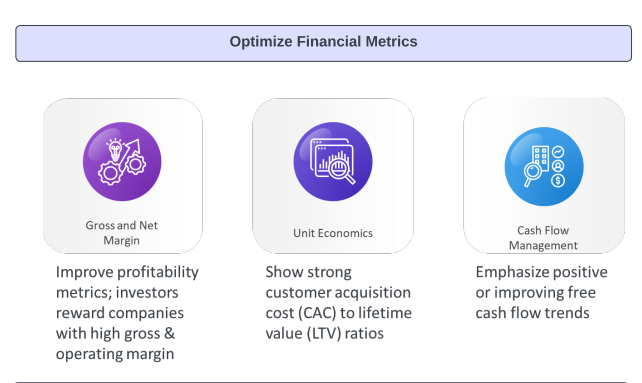
Gross Margin – Indicates profitability potential; SaaS companies aim for 70%+.
-
Net Dollar Retention (NDR) – A strong NDR (120%+) signals high customer loyalty and the ability to generate revenue from existing customers.
-
EBITDA & Free Cash Flow – Investors favor sustainable cash flow over high-burn growth as it reflects financial stability.
-
Customer Acquisition Cost (CAC) vs. Lifetime Value (LTV) – Demonstrates efficiency in customer retention and revenue generation. A high LTV/CAC ratio suggests strong profitability potential.
-
Market Share Growth – Demonstrating an increasing share in a competitive industry reassures investors about the company’s growth potential.
-
Operational Metrics – Key metrics such as user engagement, product adoption, and churn rate provide insights into business health and sustainability.
4. How to Attract Investors with a Strong Equity Premium
Among the many considerations, maximizing your equity premium – the amount investors will pay above book value – stands as one of the most significant challenges. Success requires a methodical approach that begins well before your IPO date.
Developing Competitive Advantages
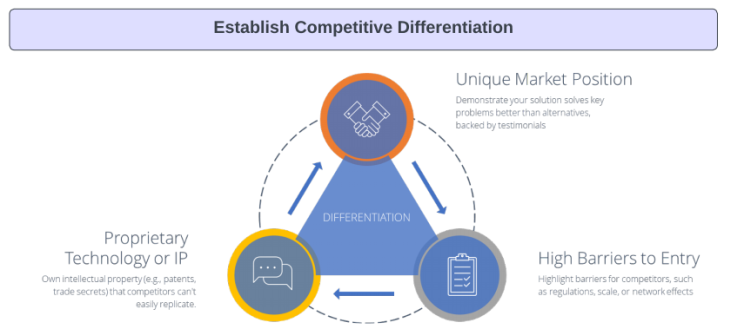
Sustainable competitive advantages form the foundation of any equity premium. Successful companies typically focus on several key areas:
Market positioning comes first. Companies that command premium valuations often hold proprietary technology or maintain significant barriers to entry in their market. This might manifest through patent portfolios, complex technical infrastructure, or deep integration with customer operations that creates substantial switching costs.
Network effects can significantly enhance this position. When each new user increases the platform's value for existing users, it creates a self-reinforcing cycle that investors recognize and reward. This dynamic particularly appeals to investors evaluating long-term growth potential
Growth Trajectory and Sustainable Top Line
Investors assess not just current operations but future potential. A clear growth strategy should address multiple dimensions:
Market expansion represents the first consideration. Companies need to articulate their total addressable market while demonstrating realistic paths to capture it. This includes both vertical expansion within existing markets and horizontal movement into adjacent sectors.
Revenue diversification also matters significantly. Companies that can show multiple, complementary revenue streams often command higher premiums than single-product businesses. This diversification should align with core competencies while demonstrating potential for margin expansion.
Financial Fundamentals: Get all the Basics Down
Strong financial management provides the bedrock for premium valuations. Key areas include:
Margin management deserves particular attention. Companies should demonstrate gross margins that meet or exceed industry standards, with a clear path to improving operational efficiency as they scale.
Revenue predictability significantly influences valuations. Recurring revenue models, long-term contracts, and high customer retention rates all contribute to higher multiples. The goal is to show investors a reliable, growing base of future cash flows.
5. Perfect the IPO Roadshow & Investor Relations
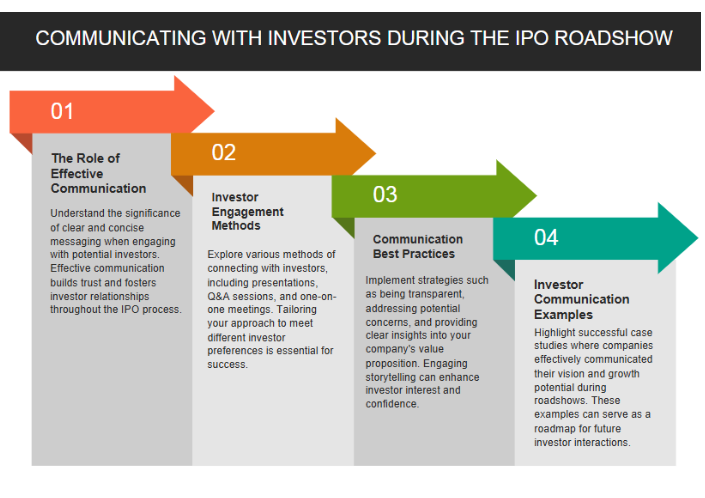
A strong IPO roadshow builds market excitement and attracts long-term investors:
-
Executive Preparedness – CEOs and CFOs must confidently communicate strategy, vision, and metrics.
-
Investor Targeting – Identify and engage with institutional investors who align with your long-term vision.
-
Transparent Communication – Manage investor expectations to prevent post-IPO volatility.
-
Use of Digital Platforms – Leverage virtual investor meetings and AI-driven investor analytics.
-
Comprehensive Marketing Strategy – Develop a strong narrative that aligns with the brand identity and conveys a clear value proposition.
-
Investor Education – Ensure investors fully understand the business model, revenue streams, and long-term growth strategy.
-
Proactive Media Engagement – Utilize press releases, media interviews, and thought leadership content to maintain market interest.
-
Stakeholder Coordination – Align communication efforts between executives, legal teams, underwriters, and financial advisors to present a unified message.
-
Roadshow Rehearsals – Conduct multiple practice sessions to refine messaging, anticipate investor concerns, and prepare executives for tough questions.
6. Navigate Post-IPO Challenges
Going public is just the beginning. To maintain success, companies must:
-
Balance Growth with Profitability – Sustainable expansion is more attractive than reckless spending.
-
Deliver Consistent Earnings – Meeting or exceeding expectations is crucial.
-
Maintain Strong Investor Relations – Keep investors informed and engaged with quarterly earnings calls, shareholder meetings, and transparent reporting.
-
Manage Market Expectations – Set realistic targets and communicate clearly to prevent stock volatility.
-
Prepare for Market Volatility – Develop contingency plans to mitigate risks associated with economic downturns and geopolitical uncertainties.
-
Implement Robust Compliance Measures – Ensure ongoing adherence to SEC regulations and corporate governance best practices.
-
Enhance Operational Efficiencies – Continuously optimize business operations, automate processes, and leverage AI for decision-making.
-
Develop a Post-IPO Growth Strategy – Identify new revenue streams, potential acquisitions, and market expansion opportunities to sustain long-term growth.
-
Employee Retention & Culture Management – Foster a strong organizational culture to retain key talent and maintain workforce morale amid increased public scrutiny.
Success Story:
Databricks: Databricks crafted its IPO narrative around being a leader in data analytics powered by AI. By showcasing its substantial market potential and robust financial performance, it positioned itself as an indispensable tool for enterprises navigating data challenges. The company emphasized its role in helping organizations harness data for better decision-making and operational efficiency.
Revolut: Revolut's IPO emphasized its role as a disruptor in the fintech space, showcasing its innovative banking solutions that cater to a global audience. By highlighting its rapid user growth and diverse product offerings—from currency exchange to cryptocurrency trading—Revolut effectively communicated its value proposition to investors.
Final Thoughts: IPOs in 2025 – The New Playbook
The IPO market is evolving, and success requires a strategic, disciplined approach. Companies aiming for a public debut must:
-
Craft a compelling investment thesis
-
Demonstrate financial strength and operational readiness
-
Back their narrative with solid metrics
-
Execute a strong IPO roadshow and post-IPO strategy
-
Plan for long-term sustainability
-
Leverage technology to enhance transparency and investor engagement
With investor expectations higher than ever, companies that align with market trends, prioritize transparency, and execute flawlessly will achieve sustained post-IPO growth. Those planning to go public must adhere to this new playbook to maximize their chances of success in an increasingly competitive environment.
Go deeper: Guide 09, Building an Equity Premium, part of the CFO Guide Series: 24 one-page guides for CEOs and founders.
