
How to Garner an Equity Premium
Valuation impacts everything from fundraising, acquisitions, and stock incentives to public market success. Companies with premium valuations often attract significant investor interest and gain access to better growth opportunities. Ever wonder why two similar companies have such different valuations?
So what sets apart businesses that achieve premium valuations? It comes down to optimizing the valuation multiple—how much investors or buyers are willing to pay relative to key financial metrics like ARR, revenue, EBITDA, or profit. These multiples are influenced by financial performance, scalability, brand positioning, leadership strength, and growth potential.
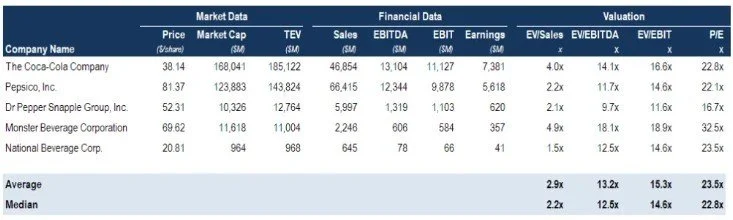
Here’s a comprehensive guide to achieving a premium valuation, drawing from both practical strategies and our take on valuation.
1. Demonstrate Sustainable Revenue Growth
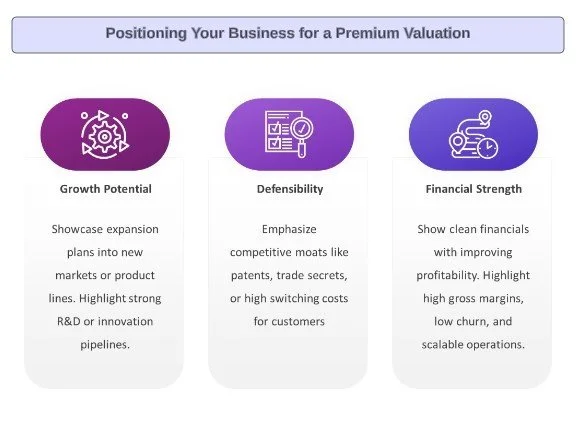
Revenue growth is a cornerstone for higher valuations, particularly when it is consistent and scalable. Companies with strong Compound Annual Growth Rates (CAGR) over 3-5 years and untapped growth potential are seen as lower-risk, high-return opportunities.
Growth and Consistency:
-
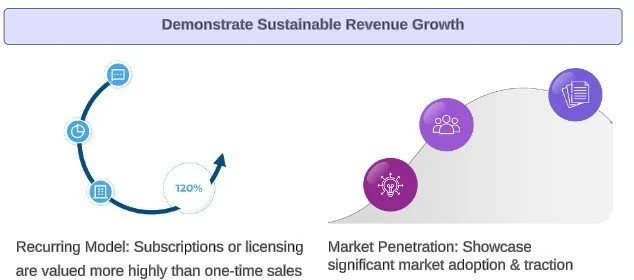
Adopt Recurring Revenue Models: Subscription-based or licensing revenues often command higher multiples compared to transactional sales. These provide predictability and stability. Lumpy revenue companies can have very low multiples as investors hate surprises.
-
Expand Total Addressable Market (TAM): Showcase a roadmap for scaling into new markets, products, or verticals. Early wins in TAM expansion demonstrate traction and that your company still has plenty of opportunities ahead.
-
Highlight Market Penetration: Prove strong adoption, customer retention, and growing market share to validate your company’s growth strategy.
2. Establish Competitive Differentiation
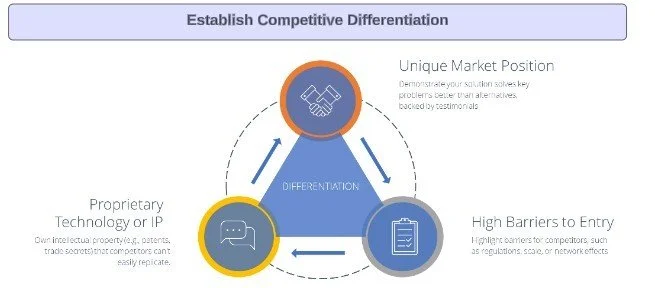
A premium valuation depends on unique value creation that sets your company apart. Investors look for proprietary intellectual property (IP), high barriers to entry, and defensible competitive moats. Warren Buffet often talks about the competitive moat so spend time doing this strategically for your business.
How to Achieve This:
-
Leverage Proprietary IP: Protect innovations with patents, trademarks, and copyrights. Proprietary technology adds tangible value and reduces competitive risks.
-
Create Barriers to Entry: Build regulatory approvals, economies of scale, or technological superiority that competitors cannot easily replicate.
-
Demonstrate Synergy Potential: Showcase how your company complements acquirers' portfolios, enabling revenue growth or cost-saving opportunities.
3. Optimize Financial Metrics and Operational Efficiency
Financial strength is a key determinant of higher valuation multiples. Businesses with improving profitability, clean cap tables, and positive EBITDA trends appeal to investors.
How to Achieve This:
-
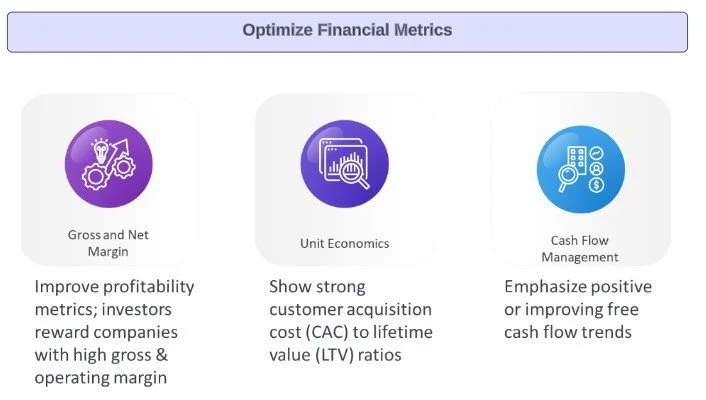
Improve Margins and Cash Flow: Streamline operations, reduce costs, and optimize the supply chain to improve unit economics and cash generation. Show a long term target for gross margins and operating margins, this helps investors paint a picture of your future potential.
-
Adopt Strategic Capital Structure: Minimize dilution through efficient financing strategies. A healthy balance sheet demonstrates fiscal discipline.
-
Highlight Scalability: Prove that your operations and processes can support growth without significant cost increases. Scalable businesses are more valuable.
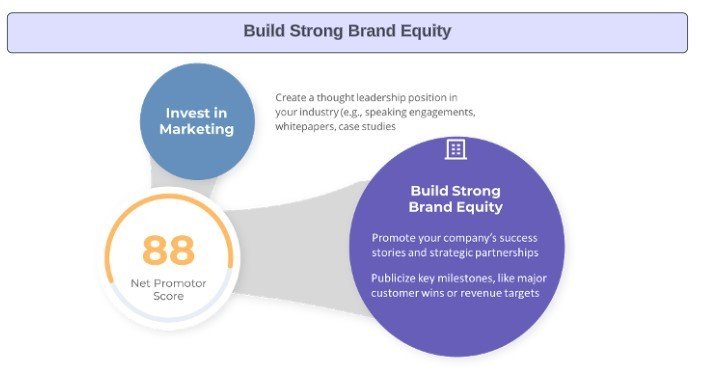
4. Build Strong Brand and Customer Base
A trusted brand and loyal customer base significantly enhance perceived value, contributing to premium valuations. The best customers are existing customers that advocate for you.
How to Achieve This:
-
Focus on Customer Retention: High customer lifetime value (LTV) and low churn rates showcase stability. Use Net Promoter Scores (NPS) to validate customer satisfaction. The article below highlights how great customers can reduce your acquisition costs.
-
Develop a Market-Leading Position: Position your brand as a thought leader through content, partnerships, and industry recognition.
-
Leverage Data for Personalization: Use analytics to enhance customer experiences, creating stickier, long-term relationships.
5. Strengthen Leadership and Governance
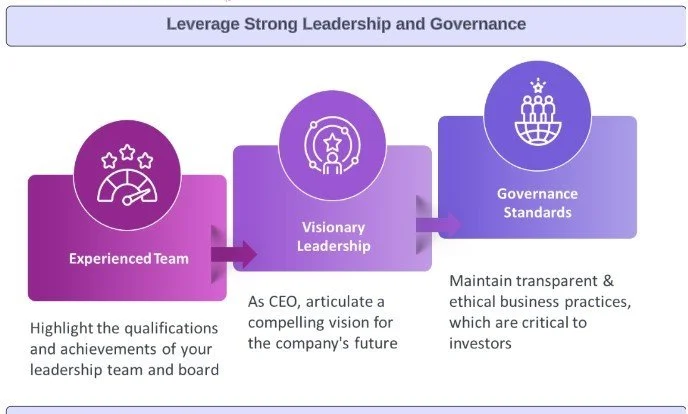
Investors bet on leadership teams that inspire confidence, demonstrate operational expertise, and can execute strategic visions.
How to Achieve This:
-
Attract Top Talent: Surround yourself with experienced professionals and advisors with proven success in scaling companies.
-
Adopt Governance Best Practices: Build an independent board, implement transparency, and align with ESG (Environmental, Social, Governance) standards to appeal to modern investors.
-
Tell a Compelling Story: Align your growth narrative with macro trends, such as sustainability, digital transformation, or AI adoption.
6. Align with Market Trends and Position for Growth
Companies that align with high-growth sectors and macro trends achieve higher valuations due to their perceived long-term potential.
How to Achieve This:
-
Capitalize on Trends: Identify and align with emerging opportunities in your industry, such as clean energy, AI, or health technology.
-
Benchmark Against Industry Leaders: Compare performance metrics like growth, margins, and market share with peers to highlight competitive advantages.
-
Articulate Growth Potential: Develop clear strategic plans for entering untapped markets or verticals, supported by credible forecasts.
7. Prepare for Strategic Outcomes
Having a well-defined endgame—whether it’s an acquisition, IPO, or independent scaling—can significantly impact valuation. Investors appreciate companies that are exit-ready.
How to Achieve This:
-
Build M&A Potential: Highlight synergies with potential acquirers, such as operational efficiencies or customer cross-selling opportunities.
-
Prepare for an IPO: Ensure financials are audit-ready, governance is robust, and leadership is prepared for public market scrutiny.
-
Develop Strategic Partnerships: Align with partners who can accelerate market access, complement technology, or offer operational support.
8. Create Competitive Tension
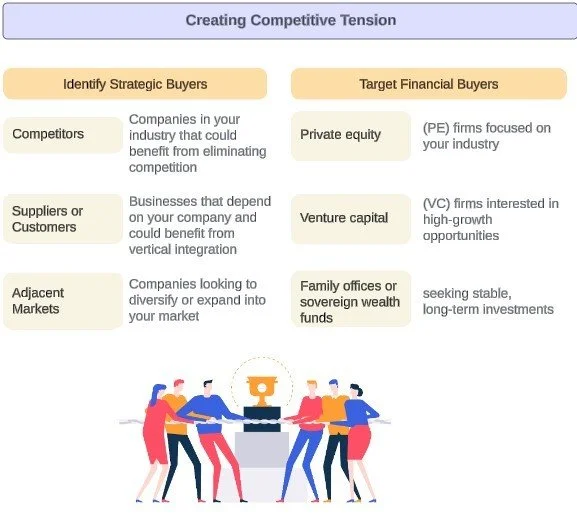
Competitive interest from multiple buyers or investors can drive up valuations. Highlighting scarcity and unique opportunities generates FOMO (Fear of Missing Out).
How to Achieve This:
-
Cultivate Strategic Relationships Early: Build relationships with potential buyers, PE firms, and investors well in advance.
-
Showcase Scalability and Synergies: Present your company as an indispensable asset with significant upside.
-
Create Urgency: Use milestones like product launches, customer wins, or regulatory approvals to build momentum and competitive tension.
Go deeper: Guide 09, Building an Equity Premium, part of the CFO Guide Series: 24 one-page guides for CEOs and founders.
