
CoPilot: The Fastest Transformation in Finance You’re Not Fully Seeing Yet
Most CFOs think AI will “help” finance.
That’s the wrong mindset.
AI is not helping finance. It’s rebuilding it—faster than most teams can adapt.
And if you think change is coming “eventually”…
Look at what’s already happened with Microsoft Copilot.
From Experiment to Enterprise Backbone
A few years ago, Copilot for Finance was seen as:
-
A productivity tool
-
An automation assistant
-
A “nice-to-have” innovation
Today?
It’s becoming a core operating layer of finance.
Inside Microsoft, Copilot now powers:
-
Real-time analytics
-
AI-driven forecasting
-
Executive-ready insights
This reflects a bigger shift:
The problem is no longer data access The problem is decision speed
The Real Bottleneck Was Never Technology
Let’s put this into perspective.
Microsoft’s finance ecosystem includes:
-
30,000+ cost centers
-
Multiple ERP systems (Dynamics, SAP, legacy)
-
Dozens of global entities
The systems were already world-class.
But the constraint?
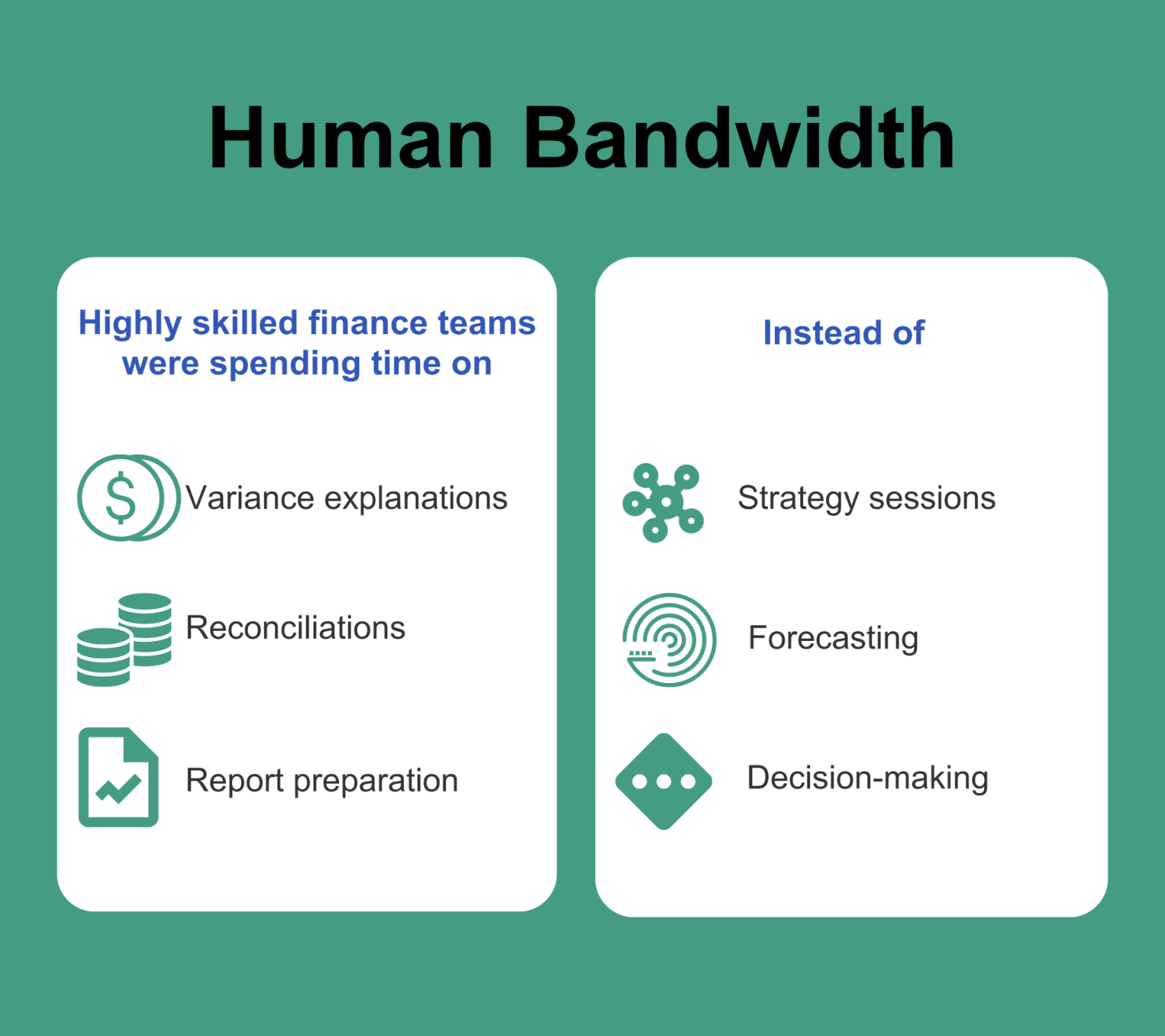
Human bandwidth.
Highly skilled finance teams were spending time on:
-
Variance explanations
-
Reconciliations
-
Report preparation
Instead of:
-
Strategy
-
Forecasting
-
Decision-making
AI didn’t just improve efficiency.
It unlocked capacity.
The 5 Upgrades That Changed Everything
Here’s what actually evolved—and why it matters:
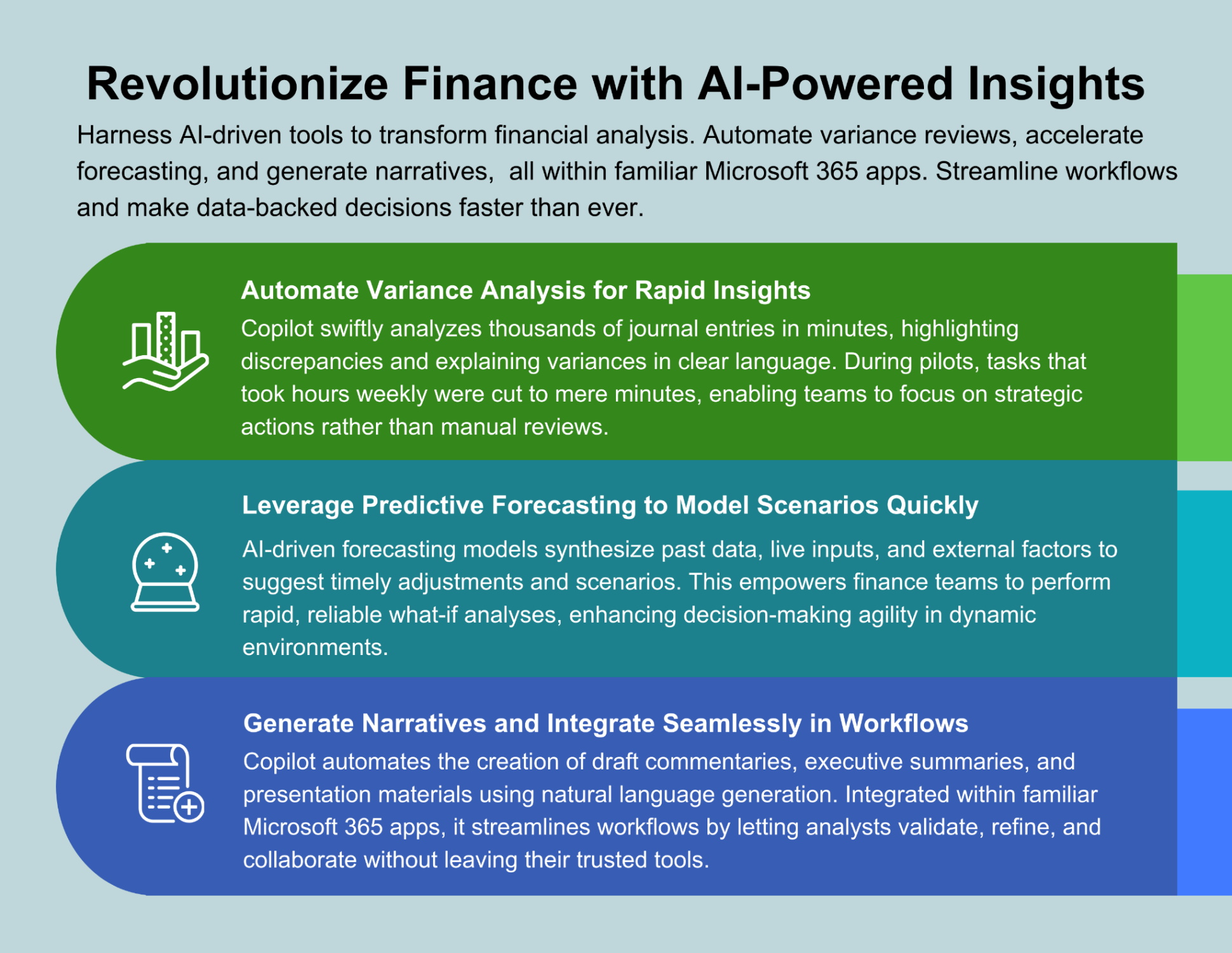
1. Variance Analysis → From Days to Minutes
Before:
-
AI could detect anomalies
-
Humans had to explain them
Now:
-
AI explains root causes in plain language
-
Connected across unified datasets
Impact: Faster closes. Better decisions. Less manual work.
2. Forecasting → From Internal to External Intelligence
Before:
-
Static, internal “what-if” models
Now:
Live integration with:
-
Economic signals
-
Supply chain data
-
Market trends
Shift: Forecasting becomes anticipation, not estimation.
3. Reporting → From Manual to Narrative AI
Before:
-
Teams built reports
-
Then added commentary
Now:
AI generates:
-
Board-level narratives
-
CFO talking points
-
Data storytelling visuals
Result: ~60% reduction in reporting time. Higher consistency across teams
4. Data → From Silos to One Intelligent Layer
With Microsoft Fabric:
-
Finance
-
HR
-
Sales
-
Supply chain
…are now connected.
This enables insights like:
“How does employee attrition impact revenue delivery?”
That’s not reporting.
That’s enterprise intelligence.
5. AI → From Static Tool to Learning System
New Copilot models:
-
Learn from user feedback
-
Adapt to company language
-
Improve accuracy over time
Next step: AI personalized by business unit, region, or function.
This Isn’t Just Microsoft
This shift is already happening across industries:
-
Retail: Dynamic budget shifts based on demand
-
Manufacturing: Predicting cost spikes before contracts
-
Finance: Real-time anomaly detection
-
Healthcare: AI-driven compliance classification
The pattern is clear:
AI is moving finance from reactive → predictive → prescriptive
What’s Coming Next (Faster Than You Think)
The next wave of finance AI will include:
-
Real-time copilots answering: “What should we do next?”
-
Self-governing AI with built-in compliance
-
Strategy simulations with risk + ROI scenarios
-
Conversational dashboards (ask finance like ChatGPT)
-
ESG + sustainability embedded into financial planning
This is where finance becomes:
Not just analytical, But continuously intelligent
The CFO Playbook (What Actually Works)
Here’s what leaders should take away:
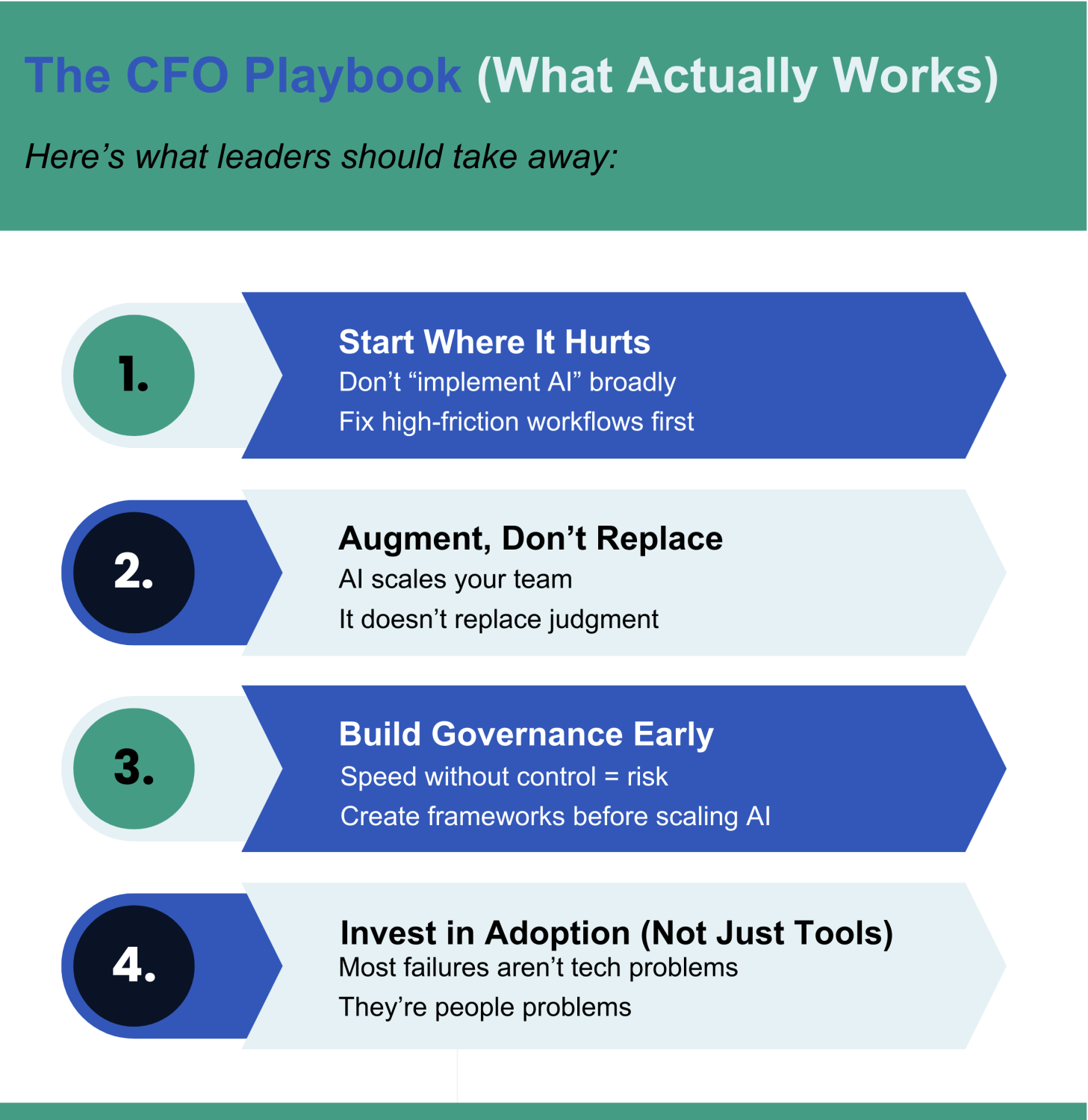
1. Start Where It Hurts
Don’t “implement AI” broadly. Fix high-friction workflows first
2. Augment, Don’t Replace
AI scales your team. It doesn’t replace judgment
3. Build Governance Early
Speed without control = risk
Create frameworks before scaling AI
4. Invest in Adoption (Not Just Tools)
Most failures aren’t tech problems They’re people problems
The Bigger Insight Most CFOs Miss
This isn’t about automation.
This is about redefining the finance operating model.
Think of it as a system:
-
Data Layer → Unified + real-time
-
AI Layer → Insights + predictions
-
Decision Layer → Strategy + execution
If one layer is weak…
The system breaks.
Final Thought
Copilot didn’t just make finance faster.
It made finance smarter, more proactive, and more strategic.
The real question is:
Are you using AI to save time? Or to change how finance operates entirely?
Because the gap between those two approaches…
Will define the next generation of CFOs.
Go deeper: Guide 04, Finance Tech Stack & AI, part of the CFO Guide Series: 24 one-page guides for CEOs and founders.
