
CFO 2030: Redefining Finance Leadership
If only I knew before.
The CFO role is now rapidly evolving into a leadership role grounded in strategy, technology, and enterprise influence.
CFOs in 2030 will shape numbers and use them to drive competitive advantage and transformation.
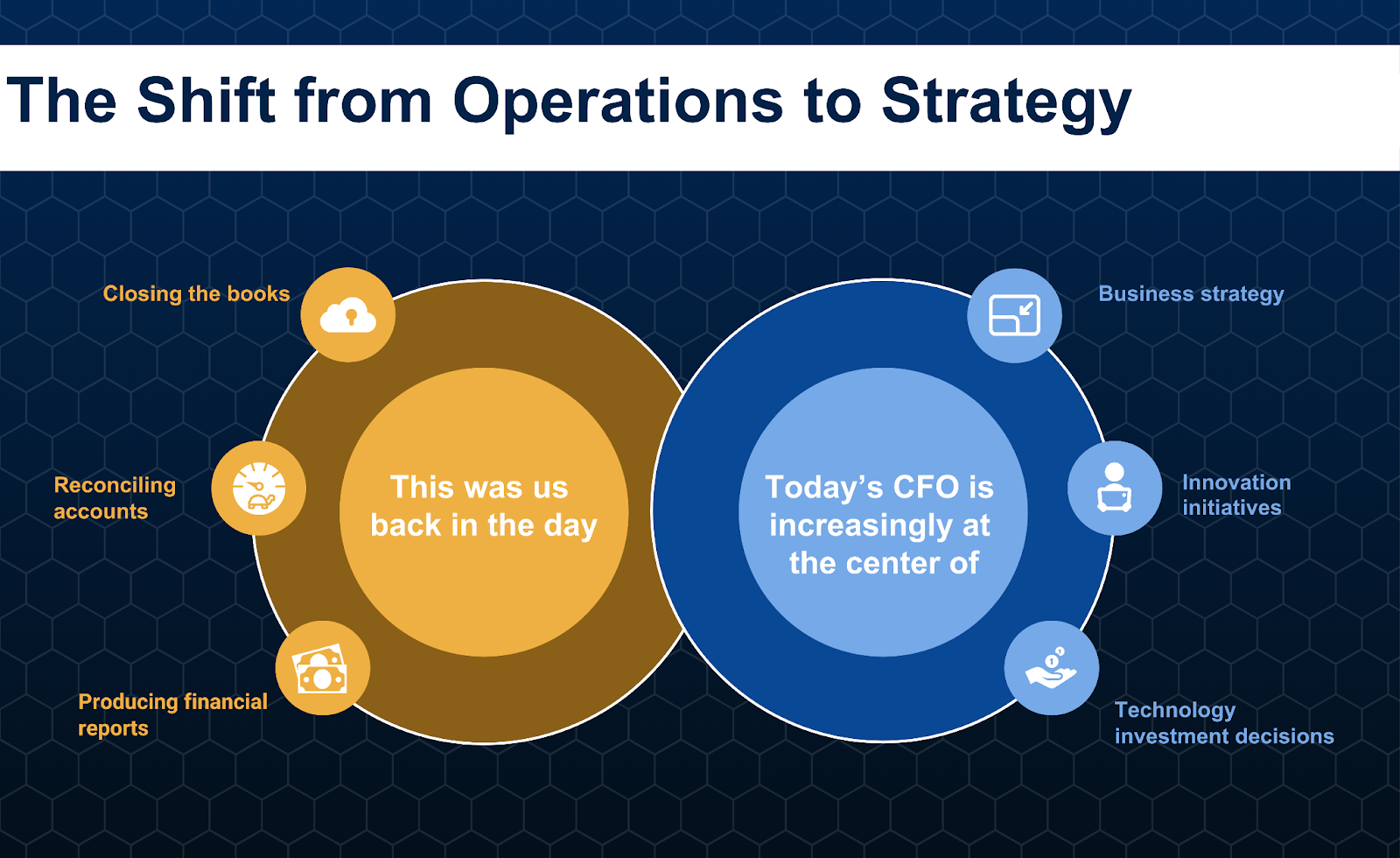
The Shift from Operations to Strategy
This was us back in the day:
-
Closing the books
-
Reconciling accounts
-
Producing financial reports
Today’s CFO is increasingly at the center of:
-
Business strategy
-
Innovation initiatives
-
Technology investment decisions
In many organizations, finance has already absorbed functions like HR. The next frontier is clear: technology and IT are moving closer to the CFO’s domain.
Finance is the strategic command center.
Technology Is No Longer Optional It’s Core
Artificial Intelligence (AI), automation, advanced analytics, and cloud platforms are fundamentally reshaping finance.
These are not future trends. They are current realities.
Forward-looking CFOs are leveraging technology to:
-
Improve forecasting accuracy through AI-driven models
-
Accelerate close cycles using automation
-
Enable real-time decision-making with advanced analytics
This marks a critical shift:
From historical reporting To predictive and prescriptive insights
The modern CFO is no longer just approving technology budgets they are co-creating enterprise technology strategy.
From Finance Steward to Strategic Architect
Leading finance organizations are expanding their role beyond operational excellence into strategic value creation.
Automation is a key enabler.
By reducing time spent on manual processes, finance teams can focus on:
-
Strategic planning
-
Scenario modeling
-
Capital allocation decisions
-
Business partnership
This evolution positions the CFO as a strategic architect, responsible not just for tracking performance—but for shaping the future of the business.
AI and Automation Are Reframing the CFO Mandate
Across industries, CFOs are investing in AI and automation not just for efficiency—but for better decision-making.
Key focus areas include:
-
Predictive modeling
-
Intelligent automation
-
Real-time performance analytics
These capabilities allow CFOs to surface insights faster, with greater precision.
However, this transformation introduces new responsibilities.
CFOs must lead on:
-
Data governance
-
Ethical AI usage
-
Risk management frameworks
-
Cybersecurity alignment
As decision-making becomes more data-driven, finance becomes the custodian of trust and integrity within the organization.
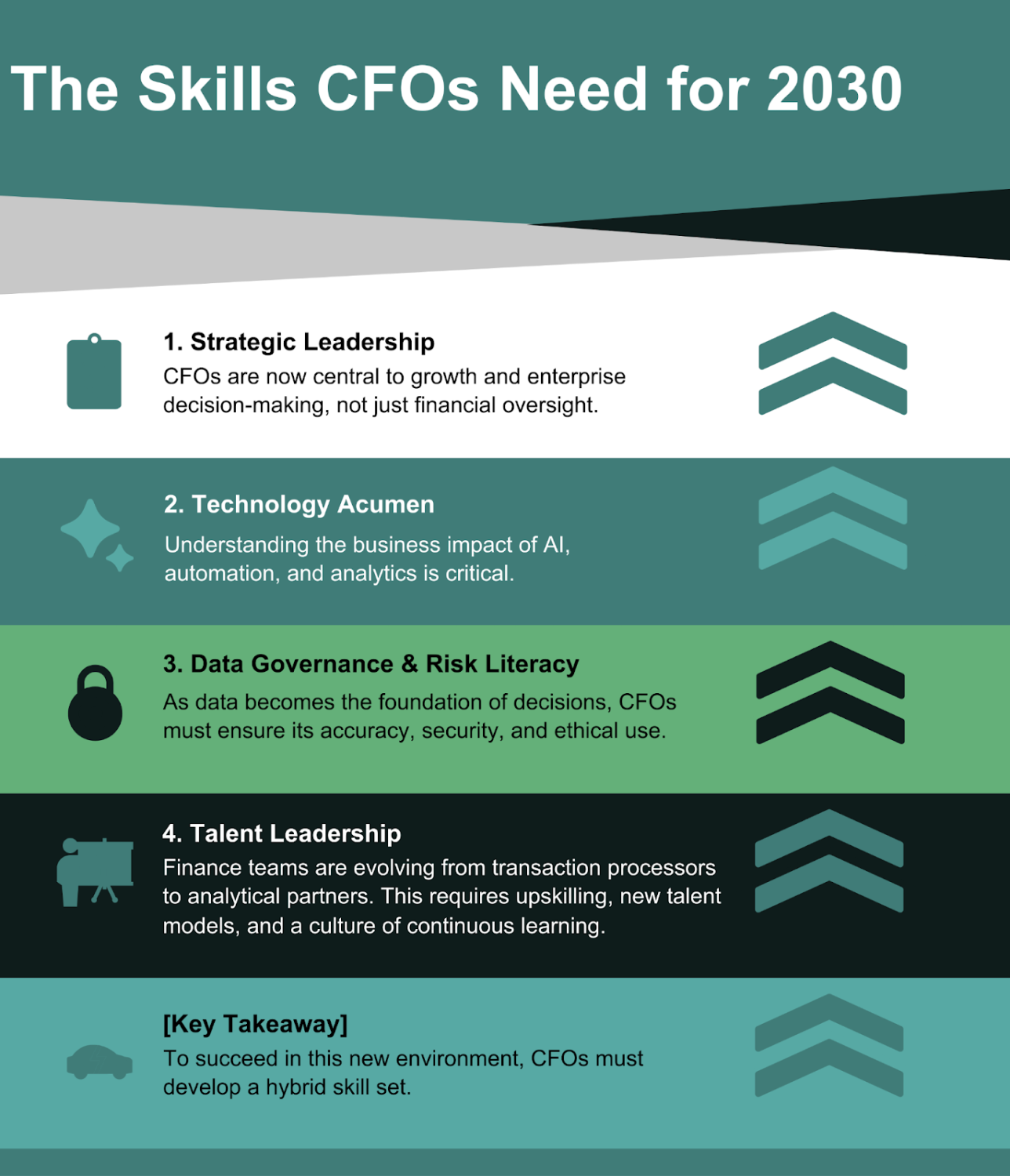
The Skills CFOs Need for 2030
To succeed in this new environment, CFOs must develop a hybrid skill set:
1. Strategic Leadership
CFOs are now central to growth and enterprise decision-making, not just financial oversight.
2. Technology Acumen
Understanding the business impact of AI, automation, and analytics is critical.
3. Data Governance & Risk Literacy
As data becomes the foundation of decisions, CFOs must ensure its accuracy, security, and ethical use.
4. Talent Leadership
Finance teams are evolving from transaction processors to analytical partners. This requires upskilling, new talent models, and a culture of continuous learning.
Industry Momentum Is Already Building
Leading organizations are already embracing this shift.
Across sectors from financial institutions to technology companies CFOs are actively balancing:
-
Automation with innovation
-
Risk with opportunity
-
Short-term performance with long-term strategy
The consensus is clear: AI will impact nearly every aspect of finance and enterprise operations.
The Path Forward: Action Over Intent
The transition to CFO 2030 does not happen overnight. It begins with deliberate action:
-
Identify high-impact automation opportunities
-
Invest in predictive analytics and real-time reporting
-
Collaborate closely with technology leaders
-
Build digital and analytical capabilities within finance teams
CFOs who act now will not only future-proof their role—they will elevate the entire organization.
The CFO role in 2030 will be defined by insight, influence, and innovation.
Technology will provide the tools. But leadership will determine the outcome.
CFOs who embrace this evolution will not just support the business— they will shape its direction, resilience, and long-term success.
Go deeper: Guide 05, Finance Automation & AI Implementation, part of the CFO Guide Series: 24 one-page guides for CEOs and founders.
