
How Leading Companies Use AI & BI to Drive Growth &Efficiency
There is too much information everywhere, and you are unsure what to do. Does this sound familiar? Operational challenges, decision-making bottlenecks, and the need for stronger customer connections are driving companies to adopt Business Intelligence (BI) and AI-powered analytics. Discover how leading companies, including British Airways, Saudi Airlines, Nova Medical Centers, Domino’s, Finaco, and ATB Financial, have implemented advanced analytics platforms to solve these problems and achieve significant business improvements.
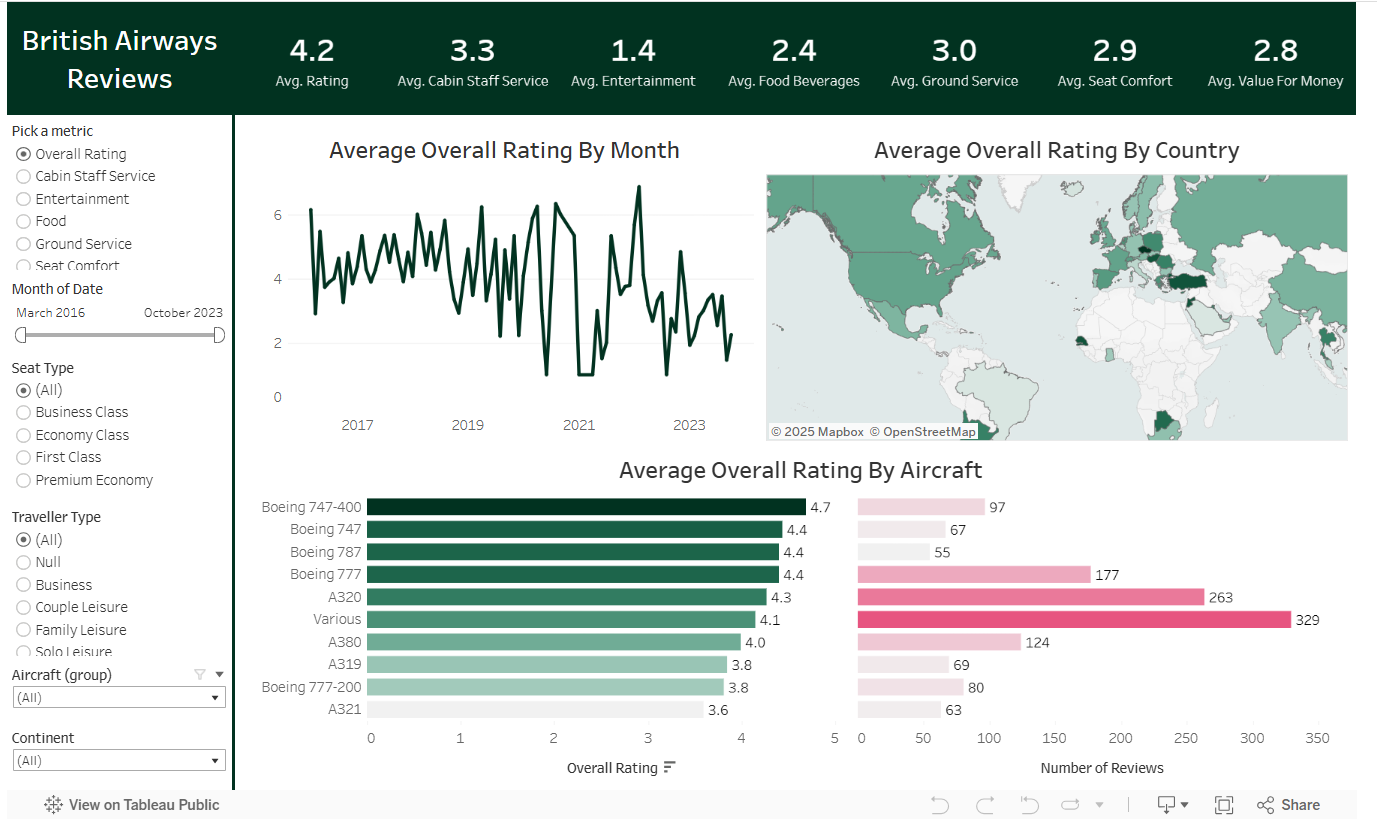
1. British Airways: Empowering Frontline Staff with Tableau for Better Decision-Making
British Airways (BA), one of the world's leading airlines, faces significant hurdles in data accessibility and productivity. Traditionally, frontline staff and managers lack real-time data access, which leads to delays and inefficient decision-making.
Solution and Impact:
-
Tableau was implemented to create interactive dashboards, such as ‘My Day @ BA,’ which is viewed over 75,000 times a year and empowers frontline staff with real-time insights.
-
Gamification encouraged employee engagement by rewarding high performance, resulting in a 400% increase in employee recognition and a 2% rise in attendance.
-
Engineers used visual analytics, such as heatmaps, to detect aircraft defects faster, protecting millions in revenue by minimizing unsellable seats.
AI-enhanced Impact
-
Predictive Aircraft Maintenance: Airlines like Delta are implementing AI systems that analyze sensor data from aircraft engines to identify potential mechanical issues before they cause failures. This proactive approach helps reduce flight delays and cancellations by addressing maintenance needs before they become critical problems.
-
AI-Driven Customer Sentiment Analysis: Airlines are using natural language processing (NLP) tools to monitor and analyze customer feedback in real-time. This allows carriers like British Airways to quickly identify and address passenger complaints, improving overall customer experience. United Airlines has implemented a similar AI approach with their "ConnectionSaver" system, which automatically helps rebook passengers affected by flight delays.
Key Takeaway: Democratizing data with intuitive dashboards and gamification dramatically improves productivity, engagement, and operational efficiency, and AI can take it a step further.
2. Saudi Airlines: Achieving Unified Global Operations with Power BI
Saudi Airlines faced fragmented data systems and lacked real-time insights needed to manage its growing international presence. With siloed subsidiaries and inconsistent data, decision-making was slow and ineffective.
Solution and Impact:
-
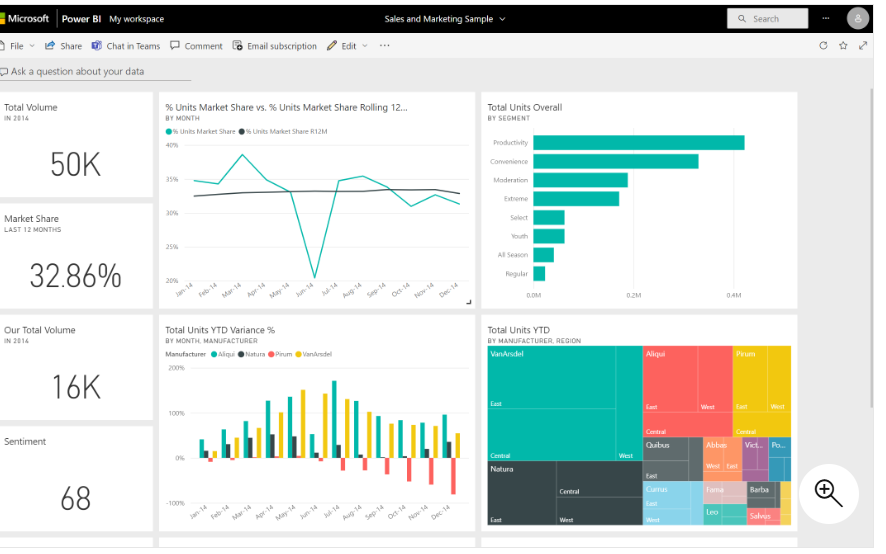
Implemented Microsoft Power BI alongside SQL Server and SharePoint, creating a centralized BI platform.
-
Real-time, interactive dashboards now allow executives to monitor KPIs dynamically.
-
Resulted in millions saved annually, enhanced fraud prevention, improved revenue tracking, and faster, informed decisions.
-
Unified BI insights across Saudi Cargo, Catering, and Ground Services, boosting synergy and visibility.
AI-enhanced Impact
-
AI-Based Dynamic Pricing Models: Airlines, including Lufthansa and Emirates are leveraging AI to optimize ticket pricing by analyzing various factors like market conditions, competitor pricing, and customer booking patterns. These systems automatically adjust prices to maximize revenue based on real-time data analysis.
-
AI-Powered Flight Disruption Prediction: Airlines are using AI algorithms to forecast potential flight delays caused by weather conditions, maintenance issues, or air traffic congestion. This allows for proactive schedule adjustments before problems occur. Southwest Airlines has implemented such AI technology to optimize flight paths, which also contributes to reduced fuel consumption and lower operational costs.
Key Takeaway: Centralized BI systems enable real-time, proactive business decisions, unifying complex operations under a single lens.
3. Nova Medical Centers: Simplifying Financial Planning with Datarails
For Nova Medical Centers, financial reporting was a tedious two-month process that involved manual data consolidation from various sources, such as Sage Intacct and Paycom.
Solution and Impact:
-
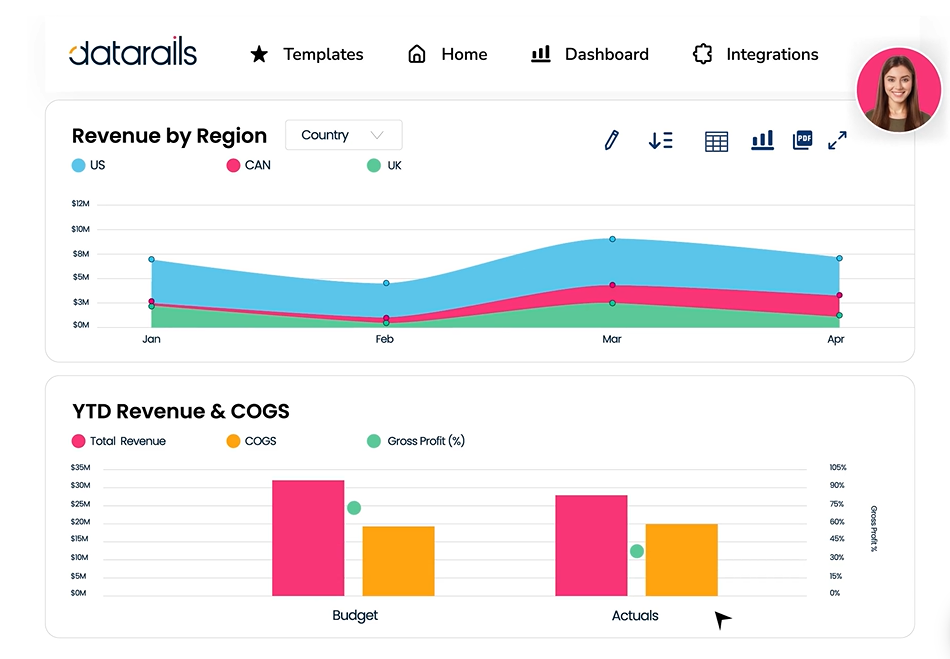
Datarails, with native Excel integration, enabled automated data consolidation and real-time dashboards.
-
Reporting time was cut from months to hours, providing instant access to critical financial insights.
-
Enhanced payroll and cost analysis empowered smarter staffing decisions.
-
Enabled operational and sales teams to track real-time performance, improving accountability.
AI Enhanced Impact
AI-Powered Revenue Cycle Management: AI systems are streamlining healthcare finances by automating insurance claims processing, predicting potential claim denials before submission, and optimizing billing procedures. This results in faster reimbursements and improved cash flow for healthcare providers.
Notable Healthcare AI offers a similar solution that uses machine learning to reduce claim denials and accelerate payment cycles for hospitals and medical practices.
AI-Driven Staff Scheduling Optimization: Healthcare facilities are implementing AI to analyze patient demand patterns and current staffing levels, creating more efficient workforce allocation. This technology helps reduce overtime expenses while maintaining appropriate care coverage. Johns Hopkins Hospital has adopted such AI systems to optimize their nurse scheduling.
Key Takeaway: Automated FP&A platforms like Datarails offer scalable, finance-friendly solutions to accelerate financial clarity and cost control.
4. Domino’s Pizza: Revolutionizing Global Operations with QLIK and Talend Data Fabric
Domino’s, the largest pizza chain globally, struggled with 85,000+ data sources and lacked a standardized data system, causing inefficiencies in customer service and operations.
Solution and Impact:
-
Leveraged Talend Data Fabric for seamless data integration, consolidating 17 TB of data.
-
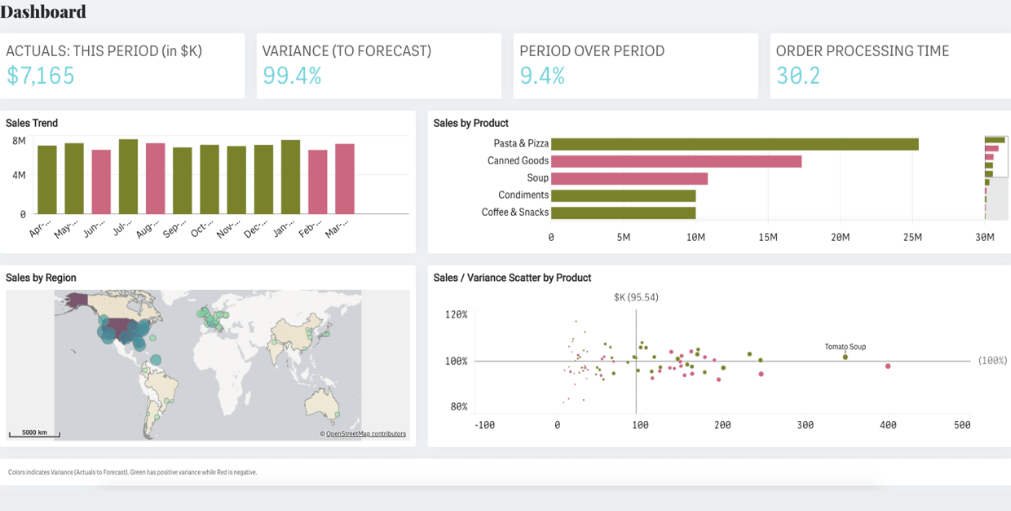
Real-time analytics provided store managers insights into order patterns, staffing, logistics, and delivery trends.
-
50% of global sales now driven through digital channels, supported by robust data insights.
-
Enabled personalized marketing, better demand forecasting, and improved customer satisfaction.
AI-enhanced Impact
-
AI-Powered Order Prediction: AI predicts demand spikes in real time, ensuring stores have the right amount of ingredients. Example: McDonald’s uses AI from Dynamic Yield for real-time menu recommendations based on weather, traffic, and demand.
-
AI-Powered Delivery Optimization: AI analyzes traffic, weather, and historical delivery times to optimize routes, reducing late deliveries. Example: Uber Eats uses AI-powered logistics for faster delivery times.
Key Takeaway: Scalable data integration combined with real-time analytics turns operational complexity into a competitive advantage.
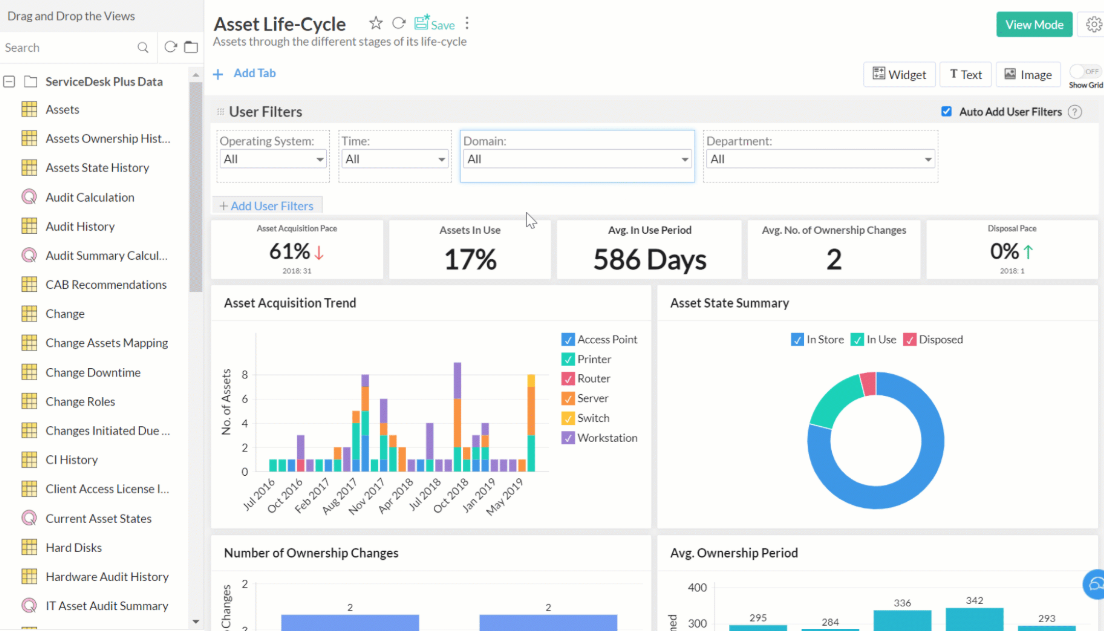
5. Finaco: Boosting Productivity by 20% with Zoho Analytics
Finaco, a financial consulting firm, faced inefficient manual analytics and lacked real-time visibility into project and financial data spread across Zoho’s suite of tools.
Solution and Impact:
-
Zoho Analytics provided seamless integration with Zoho Projects, People, and Invoice, auto-blending data into insightful dashboards.
-
Automated financial and project reporting led to a 20% productivity boost.
-
Dashboards enabled leadership to track project status, employee productivity, and financial KPIs in real time.
-
Improved resource planning and efficiency by reducing lost time between tasks.
AI-enhanced Impact
AI-Powered Financial Risk Analysis: AI detects financial anomalies and predicts cash flow risks, preventing potential losses. Example: JPMorgan Chase uses AI for fraud detection and compliance monitoring.
AI-Driven Client Investment Recommendations: AI analyzes client portfolios and market trends to provide personalized investment strategies. Example: Morgan Stanley’s AI-powered wealth management system offers tailored financial advice.
Key Takeaway: Automated, end-to-end analytics platforms empower professional service firms to make smarter, faster decisions and improve client outcomes.
6. ATB Financial: Leveraging BigQuery for AI-Powered Insights
ATB Financial, Alberta’s largest bank, faced fragmented data and slow analytics challenges, limiting their ability to provide real-time customer insights and comply with regulatory requirements.
Solution and Impact:
-
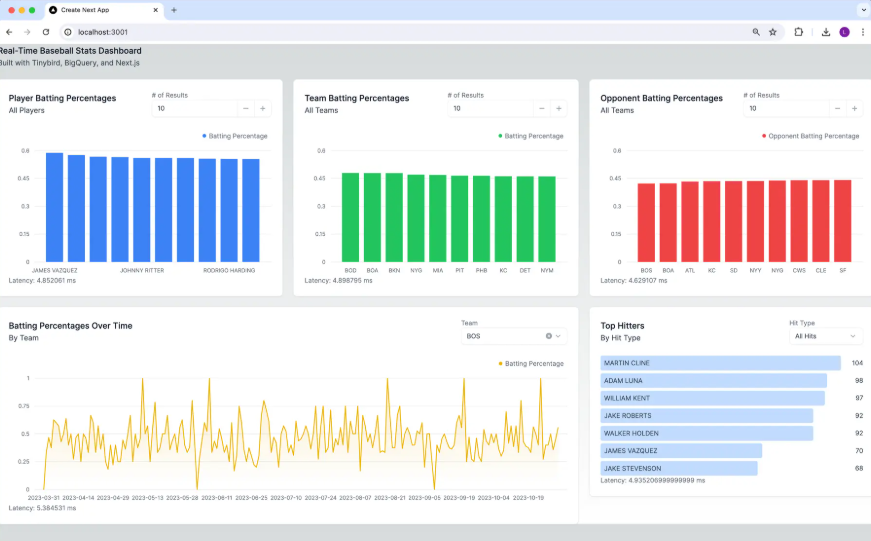
Deployed Google BigQuery, migrating 80% of their 50TB SAP data to Google Cloud.
-
Achieved 117x faster data processing, generating 160+ actionable insights in one year.
-
AI models produce 20,000+ personalized client interactions monthly, enhancing customer service.
-
Saved millions in infrastructure costs and boosted regulatory compliance with a scalable, secure data platform.
AI-enhanced Impact
AI-Powered Fraud Detection: AI analyzes transaction patterns in real-time to detect and prevent fraudulent activity. Example: HSBC’s AI system blocks fraudulent transactions within milliseconds.
AI-Based Customer Sentiment Analysis: AI examines customer interactions and feedback to enhance service offerings. Example: Wells Fargo uses AI sentiment analysis to improve digital banking experiences.
Key Takeaway: Cloud-based data warehouses with AI/ML enable real-time insights and personalization in heavily regulated industries like banking.
AI and BI, Perfect Together
Data-driven decision-making is no longer optional—it's essential for competitive advantage. Whether airlines optimize operations, healthcare providers streamline finance, retail giants enhance customer experiences, or banks improve compliance and service, the role of modern BI and AI platforms is pivotal.
Key Lessons Across Case Studies:
-
Centralized, real-time data access drives faster, smarter decisions.
-
User-friendly, visual dashboards democratize insights across all employee levels.
-
AI and ML capabilities open new frontiers for fraud prevention, personalization, and forecasting.
-
Gamification and mobile accessibility boost employee engagement and operational agility.
-
Automation reduces manual work, freeing teams for strategic initiatives.
Modern BI is shaping the next generation of agile, efficient, and customer-focused companies, from airlines to healthcare to finance to retail.
Want to learn how to choose the right BI tool for your business? Reach out for a personalized guide or tool comparison!
Go deeper: Guide 04, Finance Tech Stack & AI, part of the CFO Guide Series: 24 one-page guides for CEOs and founders.
