
A Guide to Achieve a Premium Valuation for CEOs
A strong valuation is crucial for any business, impacting everything from fundraising and acquisitions to employee stock options and overall market perception. Companies commanding premium valuations attract greater investor interest, secure better growth opportunities, and ultimately achieve greater success. But what distinguishes these high-value businesses? It boils down to maximizing the valuation multiple – the price investors or buyers are willing to pay relative to key financial metrics like annual recurring revenue (ARR), revenue, EBITDA, or profit. These multiples are influenced by a combination of factors, including financial performance, scalability, brand strength, leadership, and future growth potential.
Our visual guide provides a comprehensive roadmap for achieving a premium valuation, incorporating practical strategies and leveraging insights into what drives investor confidence.
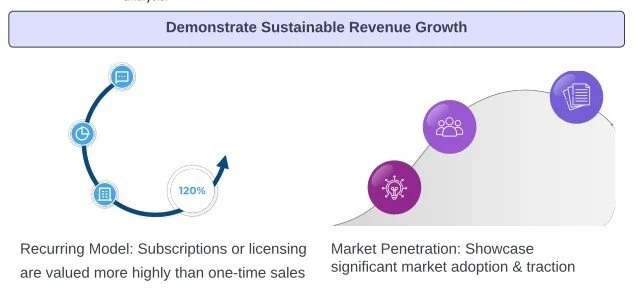
1. Fuel Growth with Sustainable Revenue:
Consistent, scalable revenue growth is a cornerstone of a premium valuation. Investors prioritize companies demonstrating strong Compound Annual Growth Rates (CAGR) over a 3-5 year period, coupled with significant untapped market potential. This combination signals lower risk and higher potential returns.
-
Embrace Recurring Revenue Models: Subscription-based or licensing models offer predictable and stable revenue streams, commanding higher multiples than transactional sales.
-
Expand Your Total Addressable Market (TAM): Articulate a clear strategy for expanding into new markets, product lines, or verticals. Demonstrating early traction in TAM expansion is key.

-
Showcase Market Penetration: Provide evidence of strong customer adoption, high retention rates, and increasing market share to validate your growth trajectory.
2. Establish a Powerful Competitive Edge:
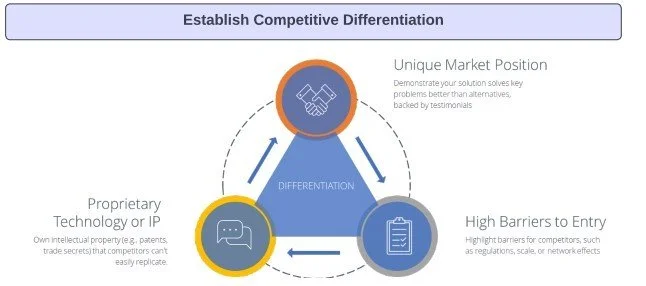
A premium valuation hinges on creating unique value that sets your company apart. Investors seek defensible competitive advantages, including proprietary intellectual property (IP), high barriers to entry, and demonstrable competitive moats.
-
Leverage Proprietary IP: Protect your innovations with patents, trademarks, and copyrights. Proprietary technology provides tangible value and mitigates competitive risks.
-
Build Barriers to Entry: Establish advantages that competitors cannot easily replicate, such as regulatory approvals, economies of scale, or superior technology.
-
Highlight Synergy Potential: Demonstrate how your company complements potential acquirers' portfolios, creating opportunities for revenue growth or cost savings.
3. Optimize Financial Performance and Operational Efficiency:
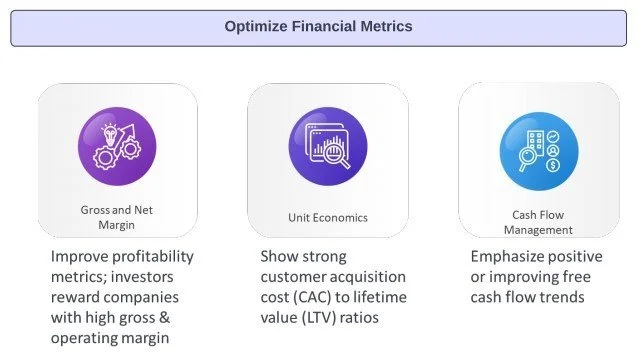
Financial strength is a critical driver of higher valuation multiples. Investors are drawn to businesses with improving profitability, clean cap tables, and positive EBITDA trends.
-
Improve Margins and Cash Flow: Streamline operations, optimize the supply chain, and reduce costs to enhance unit economics and cash generation.
-
Adopt a Strategic Capital Structure: Minimize dilution through efficient financing strategies. A healthy balance sheet demonstrates financial discipline.
-
Demonstrate Scalability: Prove that your operations and processes can support future growth without significant increases in costs. Scalable businesses are inherently more valuable.
4. Cultivate a Strong Brand and Loyal Customer Base:
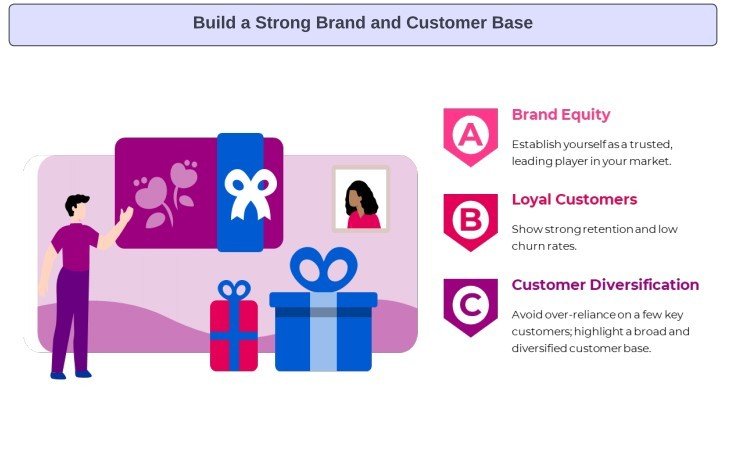
A trusted brand and loyal customer base significantly enhance perceived value and contribute to premium valuations.
-
Prioritize Customer Retention: High customer lifetime value (LTV) and low churn rates signal stability. Utilize Net Promoter Scores (NPS) to measure and improve customer satisfaction.
-
Develop a Market-Leading Position: Establish your brand as a thought leader through valuable content, strategic partnerships, and industry recognition.
-
Leverage Data for Personalized Experiences: Use data analytics to enhance customer experiences and foster stronger, long-term relationships.
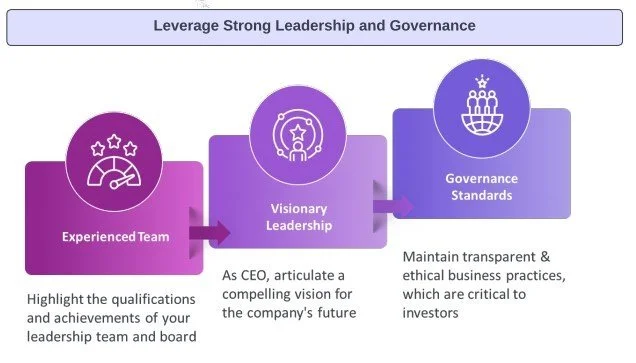
5. Build a High-Performing Leadership Team and Robust Governance:
Investors place their trust in leadership teams that inspire confidence, demonstrate operational expertise, and effectively execute strategic visions.
-
Attract Top Talent: Build a team of experienced professionals and advisors with a proven track record of scaling businesses.
-
Implement Best-Practice Governance: Establish an independent board, promote transparency, and adhere to ESG (Environmental, Social, and Governance) standards to appeal to modern investors.
-
Craft a Compelling Narrative: Align your growth story with relevant macro trends, such as digital transformation, or artificial intelligence.
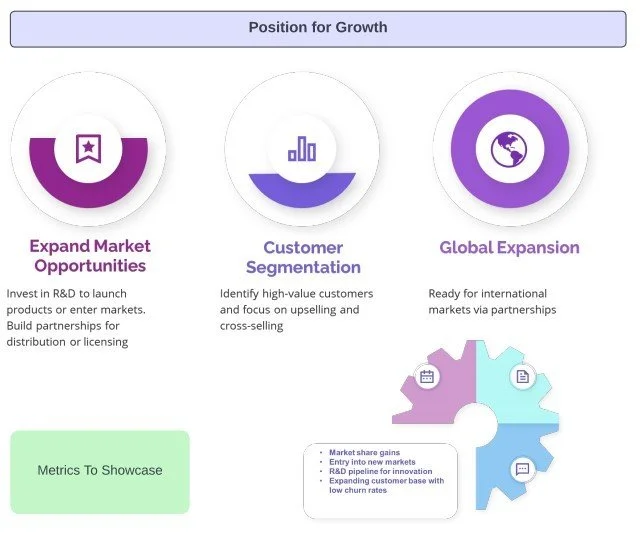
6. Capitalize on Market Trends and Position for Future Growth:
Companies aligned with high-growth sectors and macro trends achieve higher valuations due to their perceived long-term potential.
-
Identify and Leverage Emerging Trends: Capitalize on opportunities in high-growth areas such as clean energy, AI, or health technology.
-
Benchmark Against Industry Leaders: Compare key performance indicators (KPIs) like growth, margins, and market share with industry peers to highlight your competitive advantages.
-
Articulate a Clear Growth Vision: Develop concrete strategic plans for entering new markets or verticals, supported by credible financial forecasts.
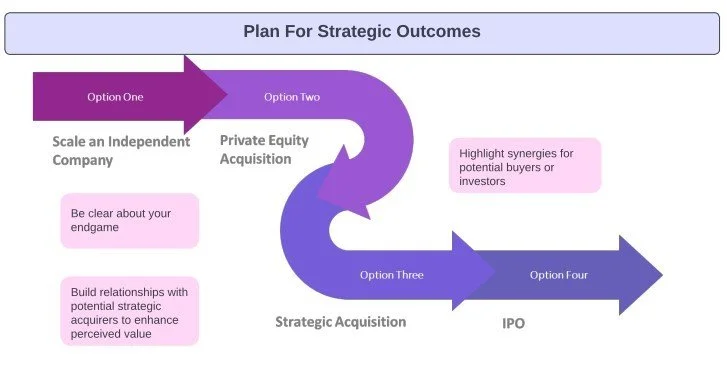
7. Prepare for Strategic Outcomes:
Having a well-defined long-term vision—whether it's an acquisition, IPO, or continued independent growth—significantly impacts valuation. Investors value companies that are prepared for various exit strategies.
-
Enhance M&A Attractiveness: Highlight synergies with potential acquirers, such as operational efficiencies or cross-selling opportunities.
-
Prepare for a Potential IPO: Ensure your financials are audit-ready, your governance structure is robust, and your leadership team is prepared for the scrutiny of the public market.
-
Develop Strategic Partnerships: Forge alliances that can accelerate market access, complement your technology, or provide valuable operational support.
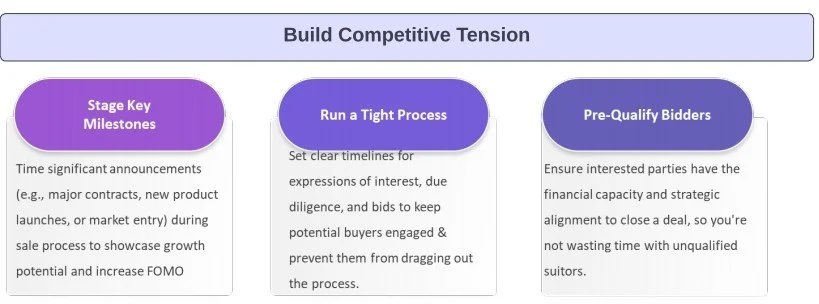
8. Generate Competitive Tension:
Creating competitive interest from multiple buyers or investors can significantly drive up valuations. Highlighting scarcity and unique opportunities creates a sense of urgency (FOMO – Fear of Missing Out).
-
Cultivate Relationships with Potential Acquirers and Investors: Build strong relationships with potential buyers, private equity firms, and investors well in advance of any transaction.
-
Showcase Scalability and Synergies: Position your company as an invaluable asset with significant growth potential.
-
Create Momentum and Urgency: Leverage key milestones such as product launches, significant customer wins, or regulatory approvals to generate excitement and competitive tension.
Happy New Year Everyone. Please reach out to us for anything in 2025.
Go deeper: Guide 09, Building an Equity Premium, part of the CFO Guide Series: 24 one-page guides for CEOs and founders.
